

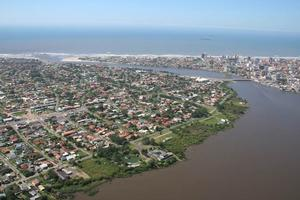
The lake network forms one of the largest continuous coastal shallow-lake systems on Earth. Despite its extraordinary size and diversity, it has received far less scientific attention than well-known freshwater systems elsewhere in the world. Yet the region is already experiencing many of the environmental challenges, expected to intensify in the coming decades - including a direct impact of the El Niño Southern Oscillation - alongside heavy urbanisation, which has driven eutrophication, agricultural and wastewater pollution, emerging contaminants such as pharmaceuticals and microplastics, and increasingly frequent extreme rainfall and flooding events.

Christian Wurzbacher of the Technical University of Munich argues that these lakes can serve as “sentinel ecosystems”- natural observatories that reveal early signs of environmental change. By combining microbial ecology, environmental DNA, remote sensing, water chemistry, and long-term ecological monitoring, scientists hope to develop new indicators capable of detecting ecosystem stress before irreversible damage occurs.
link to open access paper https://oneecosystem.pensoft.net/article/186107/