

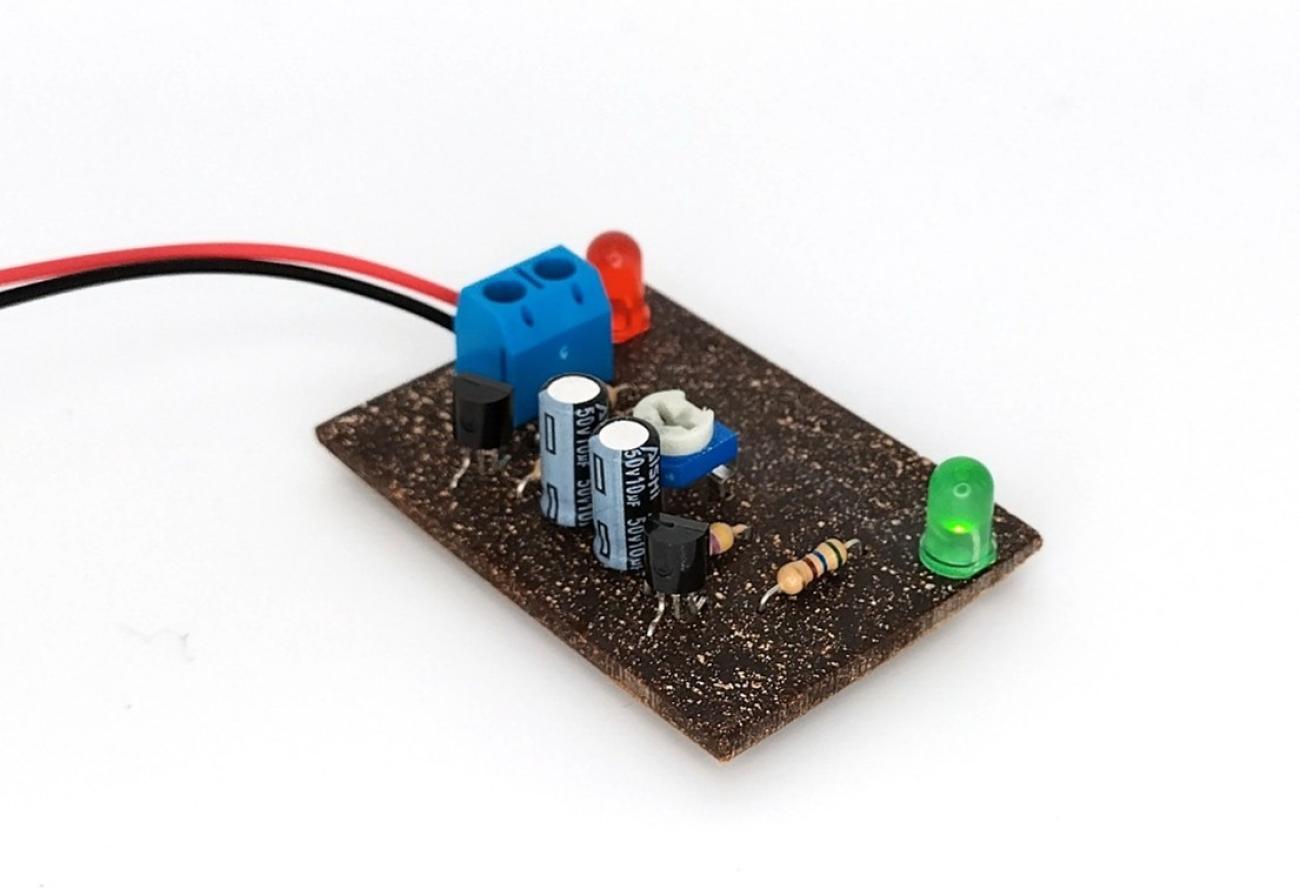
Instead of disposing of this biomass waste, the team processes it into a plastic-like material through an innovative process involving molding and air-drying, resulting in a small, approximately 0.5 cm thick plate with a density of 1.23 g/cm³, comparable to the density of conventional printed circuit boards (PCBs). Using direct ink writing or a standard etching process and manual soldering, the researchers were able to deposit electronic components directly onto the fungal plates.
It’s true that in the article they do mention that the board needs to be optimized in terms of its water absorption. Still, this is a bioplastic, meaning it’s not like a cardboard or something that will start biodegrading on you out of nowhere.
Re “bioplastics” and similar technologies: people really underestimate what some of these types of things are capable of. There’s a pretty big spectrum between tissue paper that lasts days and thermoplastics that last centuries, but for some reason when people hear “biodegradable” anything they immediately think of the tissue paper. There’s still a long way to go in the material science (mostly in terms if economic viability) but some environmentally safe materials can be surprisingly robust.
PLA looks and feels like any other plastic. Pretty sure it lasts a very long time if you were to drop it on the floor of a forest and that is an ideal location for biodegrading.
Got a cheap 3D ages ago which is why I looked it up. Don’t really use it much though, said I would buy a better one if I use it but only used it like 3 times in a few years now.
IIRC, PLA just doesn’t biodegrade unless it’s exposed to high temperature. It’s “biodegradable” but only under specific conditions.