The operation, run by Pennsylvania-based Ag-Grid Energy, is the first of its kind in the country. The company claims the anaerobic digestion of manure and food waste could be a game-changer, not only in powering crypto, but data centers, which currently use 4.9% of the country’s electricity, a figure that could double by 2030.
There are a handful of net energy producing waste treatment processes in the world, and they all achieve it by taking advantage of hyper local opportunities to optimize. They are not infinitely scalable. For example, T. PARK in China takes sludge from several wastewater plants and uses the energy to power one of them.
Further, it is not truly net positive if it leaves residuals that need further treatment.
The project claims to recycle more than 45,000 gallons of food waste per day and the manure of 4,000 cows. “What we want to do is also provide, if possible through fiber optics, [the] value of the AI computing capacity to that same regional area,” Akki says.
The energy isn’t in the manure. Wastewater plants use food waste (co-digestion) to boost methane production of digesters. Some places get the food waste from a municipal green bin program but that’s a giant pain and wastewater plants tend to prefer food waste from food manufacturing. So it’s unclear if this is diverting the food waste from landfill. The best solution would be to reduce the food waste in the first place. Can you call it green if it is the result of over production?
Don’t get me wrong, I am pro-biogas. In municipal wastewater treatment the best results for biogas production come when you direct as much short chain carbon to the digester, which greatly reduces one of the highest electrical loads on the plant (blowers to oxidize carbon).
You’re still burning it though. It looks good on paper because the CO2 emissions don’t count in Canadian GHG reporting because the source is biogenic. Doesn’t change the fact that there are emissions.
The digested waste, or digestate, is meant to be recycled, potentially into a range of products, such as fertilizer and animal bedding.
The energy to turn digestate into a fertilize product is pretty massive. Many of the plants that are energy neutral incinerate and the ash is landfilled.
Digested manure can be more polluting than manure that hasn’t been digested, according to USDA research.
Eeeehhhhh… Technically true but only because people are allowed to operate digesters poorly. I was talking to an engineer in the states who told me his digester was losing 30% of the methane by leaks and I was sitting getting second hand panic but apparently that’s not super illegal? We would have problems with the environmental regulators and the TSSA.
The project intended to send about 41,000 gallons of waste per day into a tributary of Walla Walla Creek, which empties into Lake Michigan.
daily food waste estimated to be 225 tonnes and it may require on site processing.
less than half of the digester feed will be manure.
Digesters are mesophilic meaning they need to be heated to and maintained at ~35 C
heat for the digester is provided by burning fuel oil 🙃 (most municipal plants burn the biogas)
gas upgrading is by chilling, filtering and compressing for transport via pipeline. No mention of energy demands.
the project would add runoff capture for manure storage which didn’t exist before.
the manure needs to be pretreated before digestion to remove sand
the project agreement means Vanguard is not responsible for the waste products after the gas is removed.
the project will create waste with more nutrients than the farm can land apply on their site. (You know, due to the additional food waste). There are therefore no details about what the plan is for the digestate.
based on a news article it sounded like they wanted to build a pipeline to transport it to other farms for land application. That might be where the waste to the creek idea came from? The pipeline was to go under the creek. Maybe that was just if it broke?
the enclosed engineering drawings are civil/structural only, no indication of power demand or fuel consumption.
two natural gas boilers at 4 MMBTU/hr (unclear if this is instead of the fuel oil in the other doc?)
the pressure relief system was to have a flare, which is positive. It is better to flare gas in an energy versus just venting.
The nutrient management permit application is behind a log in so I can’t see it but this article has statements from Vanguard that contradict the engineering plans.
Hanselman says the company never uses human waste in its digesters, which is how PFAS would enter the equation and that the sources of the other organic food waste would likely be byproducts from dairy processing and beer brewing.
The application included provisions for accepting packaged food. The packaging is where the pfas is.
The process Vanguard’s co-digesters use to clean the digestate on the back end, Hanselman says, allows for nutrients to be removed and taken away. That allows the farm to limit the amount of phosphorus and nitrogen that is spread on the farm’s land. He noted that at the company’s first project in Vermont, they’re removing 12 tons of phosphorus per day from the environment.
This is explicitly untrue for the Waupaca project? Vanguard has no part in digestate treatment. Sometimes there is phosphorus removal during H2S removal (if FeCl is used) but this project used a scrubber. So no nutrient reduction.
I obviously can’t speak for every project, but this example project would increase the amount of nutrients the farm has to manage (because of the trucked in food waste). It would increase energy consumption, and there was no plan for what to do with the digestate. It’s not even clear if there is a net methane release reduction over their previous methods because the carbon in the food is more likely to convert to methane in the digester. The more slow to break down carbon from the manure may still end up on fields.
Food waste digestion needs a less biodegradable feed stock to make the process more stable. In municipal wastewater you balance raw sludge (easily digestible) and secondary sludge (less easily digestible) to ensure the acetogenisis step doesn’t poison the methanogens step.
I don’t see a benefit to the local community in this proposal at all. If they treated the wastewater using energy efficient methods then maybe? But not this project as it was proposed. Vanguard gets the slowly biodegradable material, land to use, to be absolved of responsibility to deal with byproducts. Seems like a bad deal.


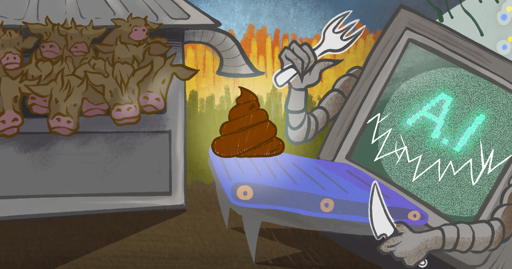
There are a handful of net energy producing waste treatment processes in the world, and they all achieve it by taking advantage of hyper local opportunities to optimize. They are not infinitely scalable. For example, T. PARK in China takes sludge from several wastewater plants and uses the energy to power one of them.
Further, it is not truly net positive if it leaves residuals that need further treatment.
The energy isn’t in the manure. Wastewater plants use food waste (co-digestion) to boost methane production of digesters. Some places get the food waste from a municipal green bin program but that’s a giant pain and wastewater plants tend to prefer food waste from food manufacturing. So it’s unclear if this is diverting the food waste from landfill. The best solution would be to reduce the food waste in the first place. Can you call it green if it is the result of over production?
Don’t get me wrong, I am pro-biogas. In municipal wastewater treatment the best results for biogas production come when you direct as much short chain carbon to the digester, which greatly reduces one of the highest electrical loads on the plant (blowers to oxidize carbon).
You’re still burning it though. It looks good on paper because the CO2 emissions don’t count in Canadian GHG reporting because the source is biogenic. Doesn’t change the fact that there are emissions.
The energy to turn digestate into a fertilize product is pretty massive. Many of the plants that are energy neutral incinerate and the ash is landfilled.
Eeeehhhhh… Technically true but only because people are allowed to operate digesters poorly. I was talking to an engineer in the states who told me his digester was losing 30% of the methane by leaks and I was sitting getting second hand panic but apparently that’s not super illegal? We would have problems with the environmental regulators and the TSSA.
Excuse me what
There are some high level engineering plans available.
Some highlights:
There is also an air pollution permit application available. Additional details about the project include
The nutrient management permit application is behind a log in so I can’t see it but this article has statements from Vanguard that contradict the engineering plans.
The application included provisions for accepting packaged food. The packaging is where the pfas is.
This is explicitly untrue for the Waupaca project? Vanguard has no part in digestate treatment. Sometimes there is phosphorus removal during H2S removal (if FeCl is used) but this project used a scrubber. So no nutrient reduction.
I obviously can’t speak for every project, but this example project would increase the amount of nutrients the farm has to manage (because of the trucked in food waste). It would increase energy consumption, and there was no plan for what to do with the digestate. It’s not even clear if there is a net methane release reduction over their previous methods because the carbon in the food is more likely to convert to methane in the digester. The more slow to break down carbon from the manure may still end up on fields.
Food waste digestion needs a less biodegradable feed stock to make the process more stable. In municipal wastewater you balance raw sludge (easily digestible) and secondary sludge (less easily digestible) to ensure the acetogenisis step doesn’t poison the methanogens step.
I don’t see a benefit to the local community in this proposal at all. If they treated the wastewater using energy efficient methods then maybe? But not this project as it was proposed. Vanguard gets the slowly biodegradable material, land to use, to be absolved of responsibility to deal with byproducts. Seems like a bad deal.