
This morning’s plant sales got pushed to next weekend because of high winds and low temps, so I brought home all the shallow tomatoes that were donated so I could repot them. They’ll go back to the donations tomorrow, but I took a few pictures for you all to help explain how and why to do this.
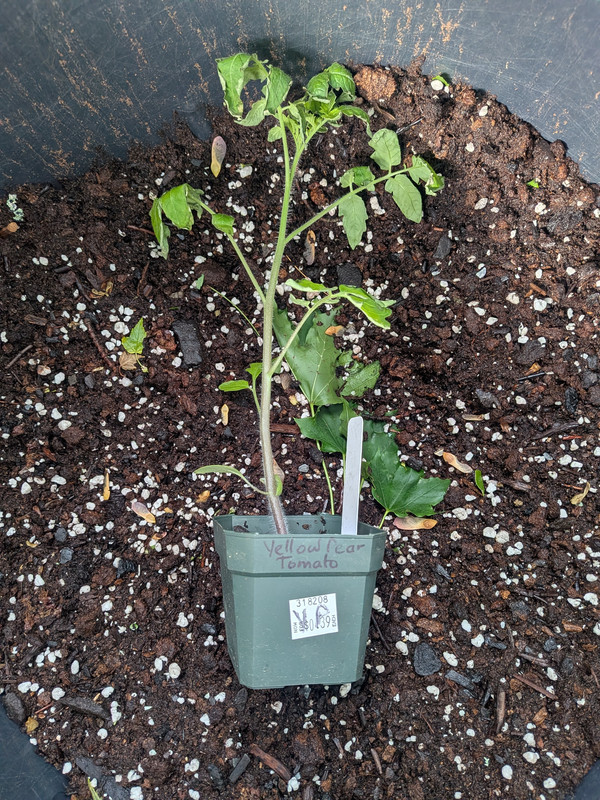
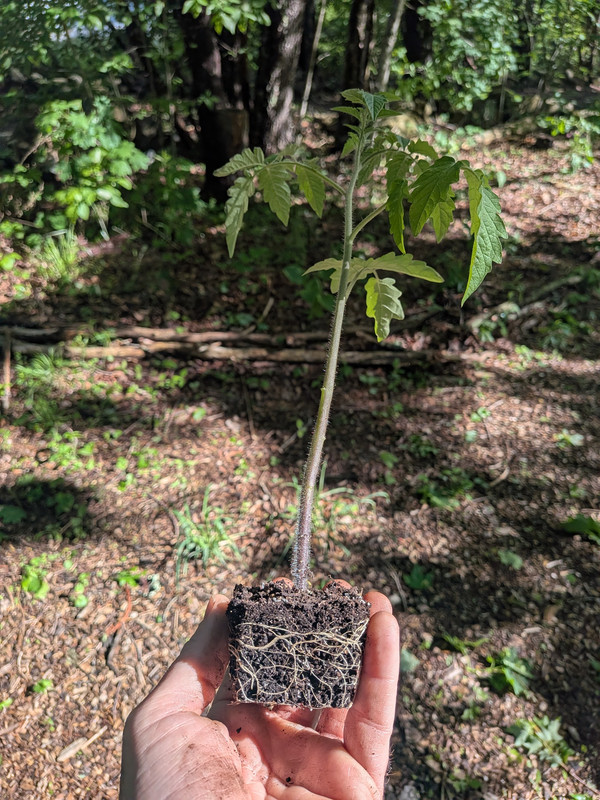
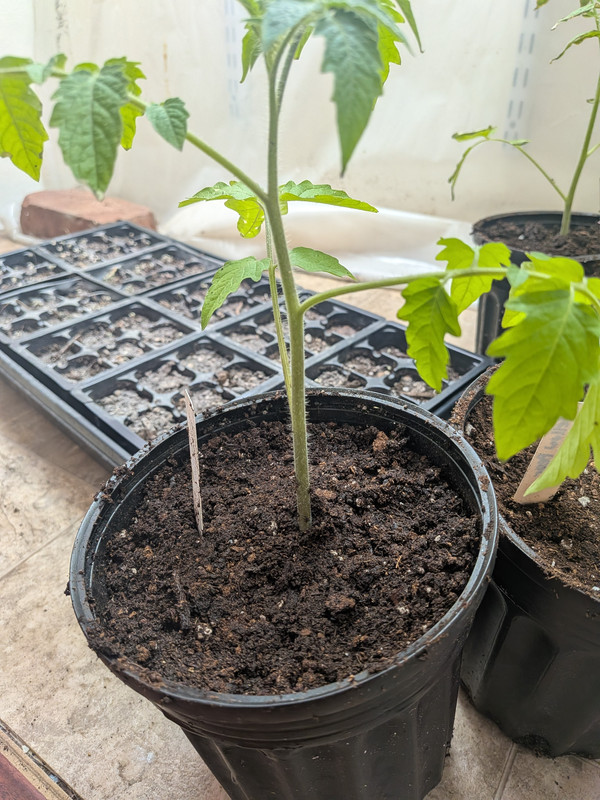
Here we have an example of what we’re starting with. The plant itself is about a foot tall, but the pot is only 1.75 inches. The plant itself looks healthy but a little stressed. The square pot helps, but the whole thing is very top heavy. Planted as-is, this plant will need immediate staking and support or it will uproot itself. It will still have to expend energy creating new roots, and will be susceptible to summer heat. Let’s move on to repotting.
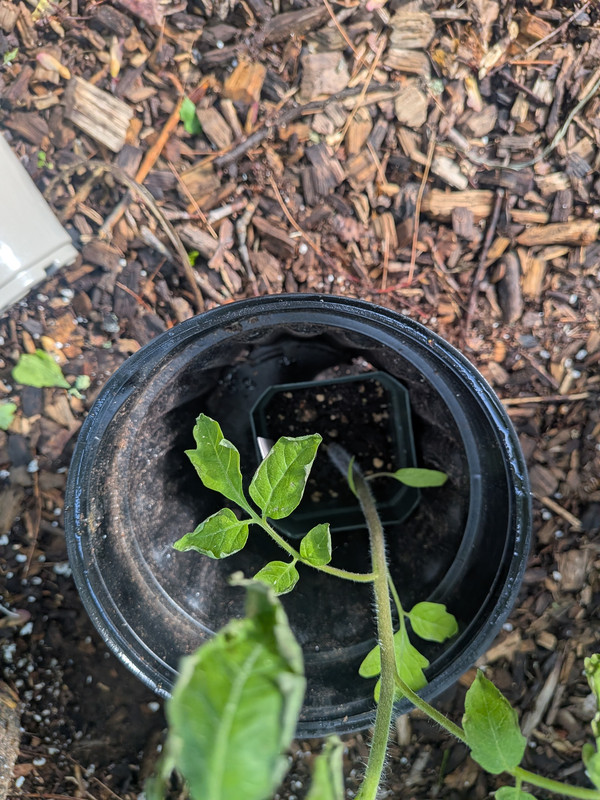
Here’s a top-down of our tomato in a 1-gallon pot. We’re doing this with the original pot in place so we can determine which leaves will be removed and then safely lift the plant to do the pruning. Once we’ve pruned off a few leaves we’ll place the roots at the very bottom of the pot and then fill the pot with substrate.
So, why do this? Every little hair on the tomatoes is an adventitious root - a specialized structure that will turn into a root in the right conditions. And we’ve just provided the right conditions. By giving the tomato a larger root ball, we’re increasing the amount of surface area from which it can draw water and nutrients to produce tomatoes. This will not only improve the number produced, but also each one’s nutritional value.
And here we have our plant repotted. It will have the whole week in a greenhouse with folks watering it to grow more roots before the plant sale. If someone asks me for advice on planting it when they get home, here’s what I’ll tell them:
If you’re planting it in a pot, give it at least a 5 gallon pot, but 10 is better. Place the root ball at the bottom of your pot, and fill with your potting mix and fertility. If you’re planting it in the ground, bury it as deep as you can, even up to the bottom of the very top most leaves. Then enjoy your tomatoes.
Whoa, thanks for information, this is a bit I was missing about the tomatoes! This deep-planting move is the opposite of what I usually do with bonsai, I was thinking that planting anything deeper is always inviting stem rot.
Now, would you by any chance have any suggestions on how could I determine which plants could be deep-planted, and which should never be?
Glad you found it helpful! I don’t know of other vegetables where this kind of treatment is recommended, though I suspect other hairy solanaceae might work this way. I also give my squash and pumpkins mulch at the point where their leaf nodes touch ground but don’t plant the initial root ball deeply.
Generally, single-stemmed woody plants don’t like this but shrubs that are defined as “suckering” types are good candidates. Likewise for any plant where stool layering is mentioned as a propagation method. Things like elderberry, haskap, goji berry, and some viburnums will do well being planted extra deep.