

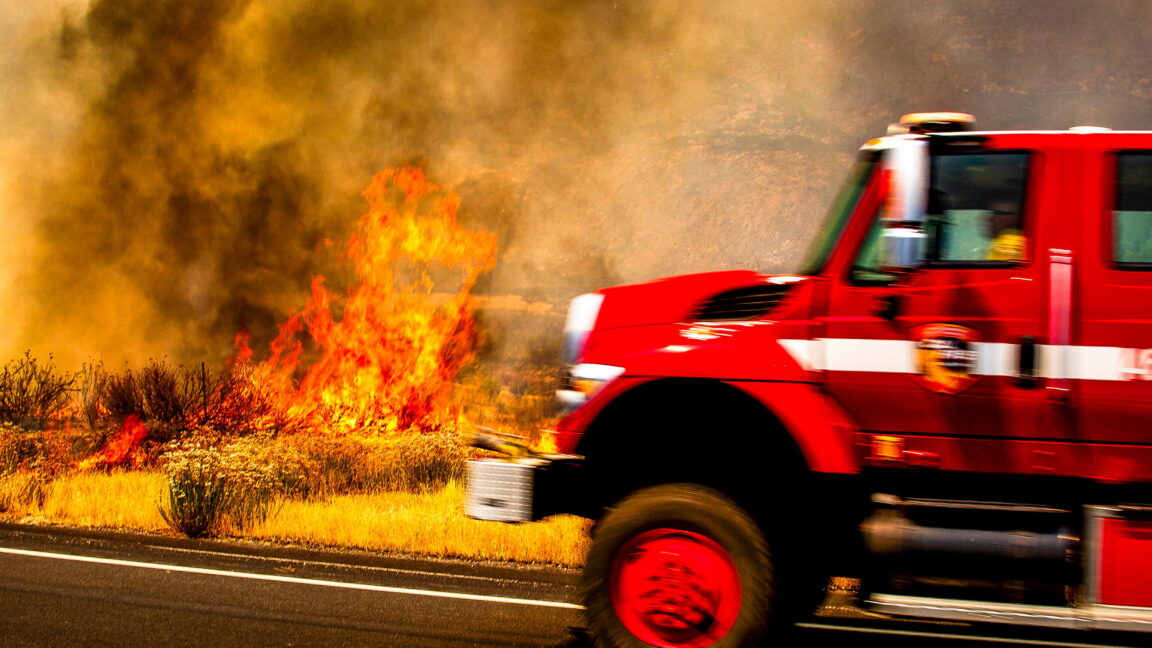
Beyond human ignitions, roads also alter the ecological conditions that drive fire risk. Aplet’s research found elevated ignitions from lightning near roads, not because there were more strikes, but because roads change ground-level fuel conditions by putting gaps in the forest canopy that allow sunlight and wind to heat and dry vegetation on the forest floor.
Roads also serve as corridors for invasive species, many of which evolved to use fire to help them spread. In the Great Basin, an area that stretches from Salt Lake City to nearly Sacramento, southern Oregon to Las Vegas, cheatgrass carried by vehicles, boots, and livestock to roadsides has displaced native vegetation by creating continuous fields of fine stalks that dry out when other grasses are just sprouting. The dry cheatgrass ignites easily and burns quickly across landscapes where native grasses that stay moist later in the season and grow in dispersed bunches previously inhibited the spread of the flames.