

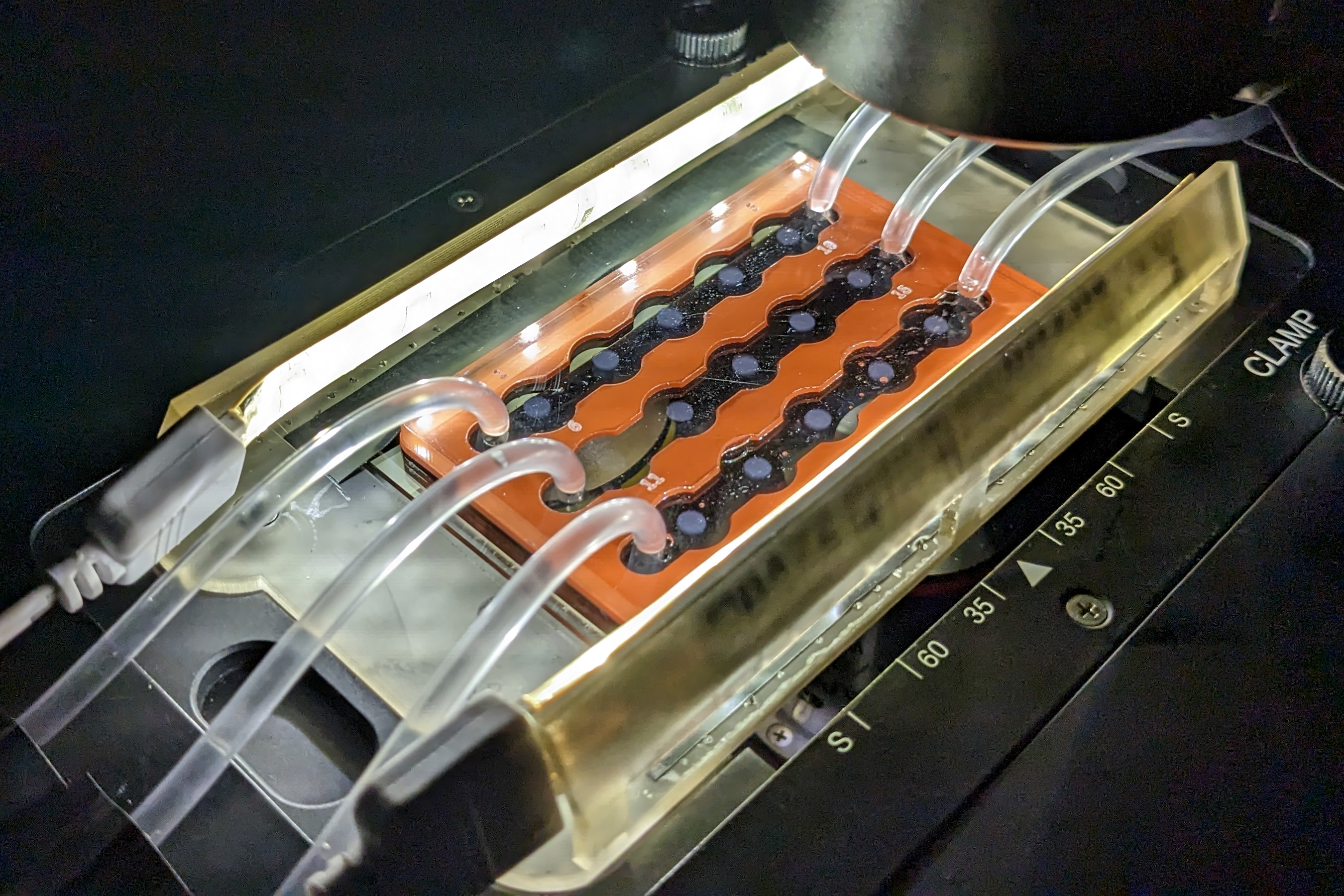
The findings, which appear this week in the Proceedings of the National Academy of Sciences, could explain how calcium carbonate dissolves in shallow layers of the ocean, where scientists had assumed it should remain intact. The results could also change scientists’ understanding of how quickly the ocean can sequester carbon from the atmosphere.
Marine snow is a main vehicle by which the ocean stores carbon. At the ocean’s surface, phytoplankton absorb carbon dioxide from the atmosphere and convert the gas into other forms of carbon, including calcium carbonate — the same stuff that’s found in shells and corals. When they die, bits of phytoplankton drift down through the ocean as marine snow, carrying the carbon with them. If the particles make it to the deep ocean, the carbon they carry can be buried and locked away for hundreds to thousands of years.