

0·
1 month agoIt’s always puzzling to me how humans call other species ‘invasive’ while continuously invading literally everything in the most damaging ways possible. Self-aware much, little man?
bog creature
Personal bog!
It’s always puzzling to me how humans call other species ‘invasive’ while continuously invading literally everything in the most damaging ways possible. Self-aware much, little man?

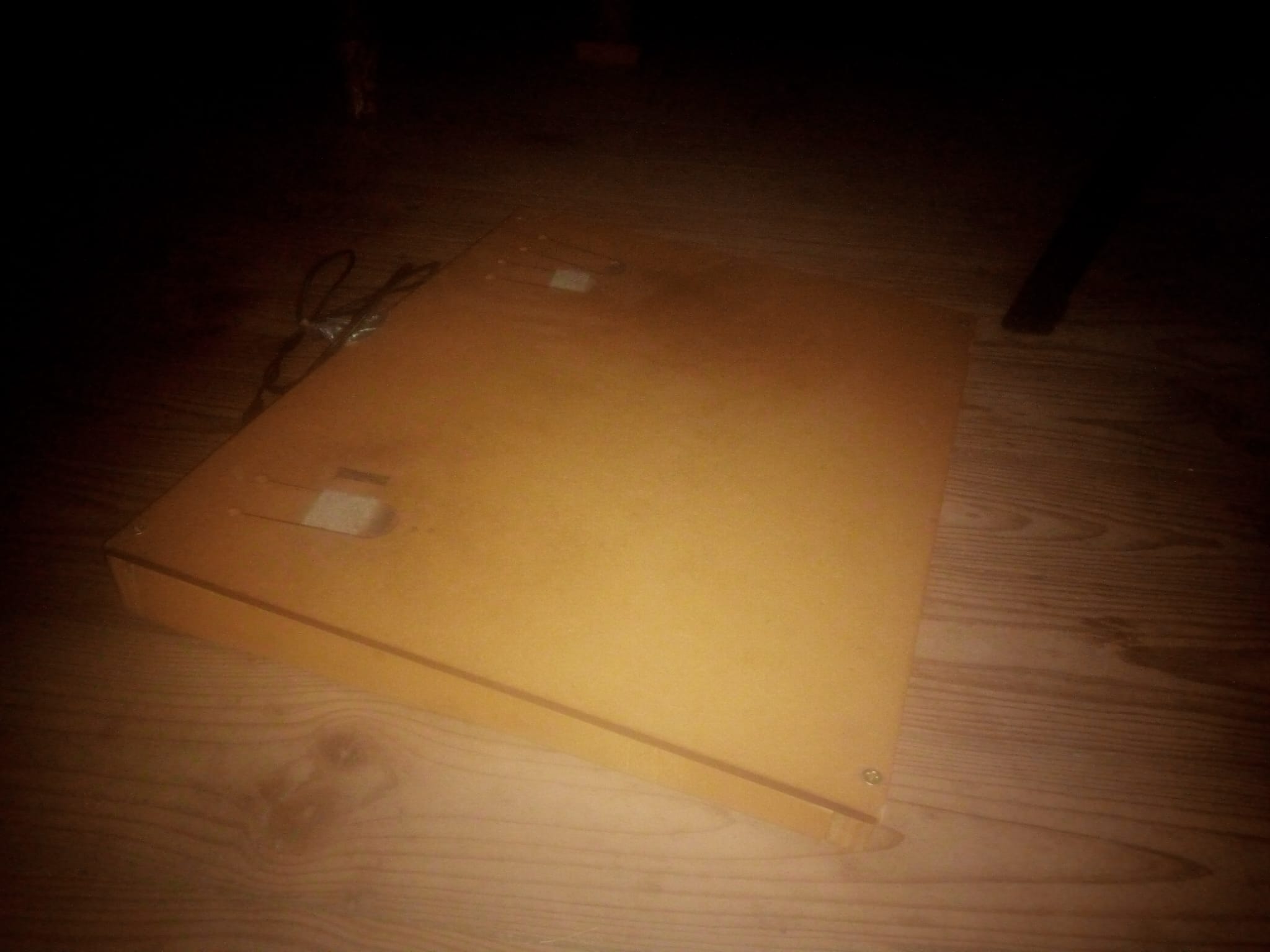
Today the frankenmouseboard got a new cable. Of course this kind of maintenance only happens once in a blue moon, after procrastinating a huge project up until the last day to then find out it involves clicking Ctrl+C 2500 times and the old cable is finally too old to work anymore. Couldn’t be arsed to go downstairs to fetch proper tools so I just chopped one of my charging cables to length with a kitchen knife (will have to replace when visiting town), looked up a diagram for the cable colours, and fucked it all together with sticky tape.
Now the cable is slightly longer and I’m very pleased with myself. I like this low effort low budget stuff a lot more than the fancy stuff I used to do that required ordering 1234567 parts from China.
Interesting, thanks for sharing! I was taking Loratadine against allergies for years. Not anymore, the allergies have sorted themselves out. Now my bones are coming apart. I can hear them rattling every month when my period comes around. Not funny, but quite funny.
Left, middle and right. There’s a scroll wheel but that stopped working and it ended up being non-essential. The wheel itself turned out to be too flimsy. Next time a working scroll wheel would be cool!
Yes, but first I have to build a few and test them - they are result of a few years experimenting and thinking about the problem from the perspectives of ease of building and using it, repairability, flexibility, price … It has the option to stack frames as high as practical and cover a stack of frames with either mosquito/flynet or shading fabric or a combination of both, and add any heat source to the bottom of a stack. The current heat would be great for drying all sorts of stuff and put this to the test, but unfortunately the same heat is crap for any mental and physical activities, so this project has been progressing slowly. But it is one of the parts of my small gardening and processing cycle. Equally slow is my documentation of this cycle. I’ll try to come up with a drawing of this idea!
That is true. Whenever I see these designs I feel like I would like to develop a hybrid model - to use with either solar heat or other heat sources when needed.
Or for a low low tech solution, a drying rack that can handle a fire under it. Things will be smoked rather than dried, but that’s not necessarily a disadvantage.
You can build stackable wooden frames, staple a net curtain to them and put them in the sun, or use those plastic fruit boxes, always covered with a net on top against insects. Placing your frames or boxes on or between rocks provides extra heat after sunset. Or the extra lazy method: place your drying net under a fruit tree, wait for fruit to drop, drag into sun or halfshade as is convenient.
When energy is low and overwhelm is much the simplest solutions are often the best.
And for indoor drying in winter a repurposed shoe shelf (or yet more stackable boxes) placed near your radiator might do the trick.
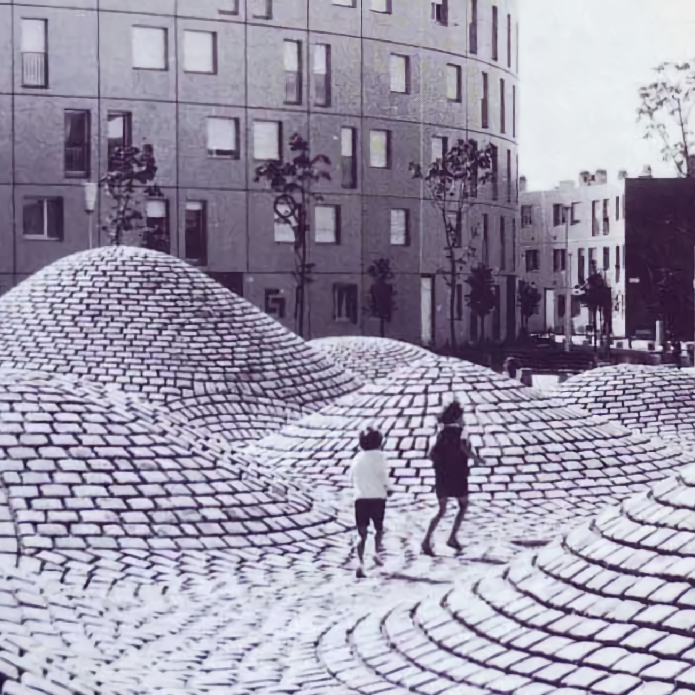
The top sustainable materials are those found close to where you build. Stones, clay, wood, types of grasses (cana, bamboo, reed …) in most places. Researching traditional building methods in your area can give you ideas of what to use. (Disclaimer: traditional building might have disappeared from your area and material knowledge and logistics lost - still worth looking into before mindlessly buying stuff of some generic list.)
You could start working on the ‘we’ first - find someone with the skills to write the code for your idea. Find people who can help you bring your project alive. Community is not only an important part, it’s the central part of your project - so there’s no advantage for you and the project in skipping this step.
Yes, we are all entangled in energy-intensive technology - but that is something I want to reduce! So for me the start for a project like you describe would be meeting the neighbours, see what they are growing, and documenting this in the way that is available to me - could be an calc sheet, or even just paper and pen. Only when there is enough information to warrant better organization would I want to consider the need for code, also because before engaging with actual people I would be very unsure what is important and how to organize it well.
Society has been gradually moving from creating stuff with substance to creating stuff with shiny surfaces - and too often software and especially vibecoding play into this. The actual information becomes unimportant, presentation becomes everything. I feel that in order to return to substance we have to look at all tech with a very critical eye, just use what we really can’t do without, and avoid adding shiny new stuff wherever we can.
Now I’m still interested in your project and I’m sure you would find other people who do the coding part for or with you - so please don’t be discouraged by the anti-AI-backlash but maybe see if there’s another way to get this off the ground.
I do like the idea of a map to collect growing and gardening information but I won’t touch anything where LLMs are used.
If your project is worth it you can structure the general idea with pen and paper, and then let some of the many recently laid off programmers loose on it. But you said it, the main problem is that you need a ‘we’ first.
First question that matters to me: is it vibecoded?
Curious! I like gardening and supporting local networks. Going to check out your project!
I also suspect they are way more efficient. Whenever I make these comparisons about how I would have made things a few years ago (during my EE bachelors years and brief high tech insanity phase) I realize how I save time for the things I really enjoy: sit under a tree, watch my live stream and the duckies floating on it, listen to the wind in the leaves. But I also save money, energy and materials. For at least some measurable difference: I think I managed to not visit the shops for over two weeks - because for every problem I encounter I try to find a way to solve it with what I have around here. I don’t spend the fuel and I don’t buy all the stuff I used to. At the moment I mostly use trash and leftover materials from around the farm. I rebuild, recover, reuse what I can.
Here’s some random thoughts about building materials and building, since I have been hopping around other people’s building sites and my own quite a bit throughout my life:
I look into how to use the naturally available stuff - stones, sticks, clay, plants … even nicer to work with than trash, but a bit of a learning curve for the average urban-grown person. So I have to compromise of course. I did buy wire mesh for the chicken house, for example, because I don’t trust my ability to combine the natural materials so that weasel and mongoose stay out. I am learning to build stone walls by simply playing around with the damaged walls next to my place. It’s a useful skill in a place full of stones. What is a useful skill to learn depends on where you live.
When I first started building I used bricks, cement, concrete, metal. These are not people-friendly materials, they are materials of the empire. A lot of energy goes into their production and usually they arrive from far. When you use them your skin hurts, your back hurts, your lungs hurt … Most modern building sites are sick - building in the wrong places without respect for the place and its former inhabitants, using harmful materials and creating a harmful work environment. And a bit of a feminist view? Did you know there are so many man-sized tools, bags, devices, ladders, helmets on a mainstream building site? Men come home from these places broken, needing repair from ‘their’ women. We should rethink this way of nest-building and make it a little softer.
To find people-friendly ways of building you have to rethink smaller. Or think modular - a good house is one that can grow with its community. Studying traditional ways of building in different regions can help determine what makes ecological sense where.
Good point on the structural items, something I don’t even think about in my self-built environment!
Very, very low tech, but maybe interesting info dump from the bog creature’s farm life:
Water for my garden comes through a gravity system from a smallish reservoir that refills from a permanent water source, but the source slows to a trickle in summer and so the water level is going down gradually now. I have to coordinate planting and watering to not only have sufficient water for the next day, but also throughout the whole summer. Also, if I ever left the garden tap on and the reservoir runs dry I’d have to wait months for it to refill again. To know how much water the plants need and how much I can take out of the reservoir takes a lot of experience (which I don’t have, wish me luck).
Water in my house comes from a well (same problem as the water source, limited supply in summer), and the house has a water toilet with a leaking mechanism (I know, I should either repair the damn thing or switch to a compost toilet, haven’t had the time). So far the solution is to keep the tap of the water tank of the toilet closed and just turn it on to flush twice a day. If a guest found my unflushed toilet they might think I’m a filthy bog creature, and they are not wrong!
My AC is a system of curtains, blinds and windows which I open and close or even soak for evaporation cooling at certain times of the day - if I get it wrong my rooms overheat and I have to go hide in the cellar during the hot hours. I still want to add a 5l bottle on top so the curtains soak gradually during the day - that would be my automatic AC then, yay! If I had to explain to an AC junkie how to work this system it would be a challenge.
I actually like it when my half broken and fragile system slows me down and forces me to be mindful and respect the passing of the seasons, because that is what I’m after in my life. If unlimited water just came out of a tap I’d spend it without thinking. Same with electricity everywhere. I’m on the grid now but lived here on 1 solar panel and a car battery in winter and it made me painfully aware about my energy use. Switching on the light without having to count Ah still feels like xmas and also slightly frivolous!).
Seasonal living used to be way more common, we just lost this in the factory age and following the clock has become very normalized. Harsh new climate quirks force people to either tech up or return to systems that honor the seasonal differences (or a bit of both). By adjusting yearly, monthly, weekly and daily schedules to outside temperature, water availability, sunlight availability, etc., life becomes less resource-intensive. Most of my home systems and ‘life-research’ have to do with this topic, about re-discovering how to fit into external conditions gracefully with a smallish footprint.
Lately I have been tending towards dropping more complicated tech in favour of really basic solutions. For example, I once built a stupidly complex solar cooker with tracking system and motors. These days I’d just paint a pot black and leave it in the sun all day next to a couple of mirrors leaning against a few rocks. Because with resources, money and time running short nobody needs to fiddle around with a sun tracking system.
Oh mushrooms, I wish I had time to get back to those!
Where goblincore swamp and solarpunk forest meet, where the sacred grove is being tended, the bog creature has been up to this:
I can see more than 300 trees from out of my window. I feel like my stubborn refusal of being normal and following the rules brought me here and feel like I’ve secretly hacked the system. I also feel that more than half of the city dwellers wouldn’t want to swap places with me after they learn there’s bugs everywhere and no AC.
The 3-30-300 rule is an excellent benchmark. I’m more than a little surprised that the only German cities achieving this are in the Ruhr area around Essen. Really, wtf?
I guess a tray is useful for salting it and leave it sitting. Also, a grid. But most steps can somehow be done with the simplest list of tools. I haven’t used anything else, so can’t really recommend anything.


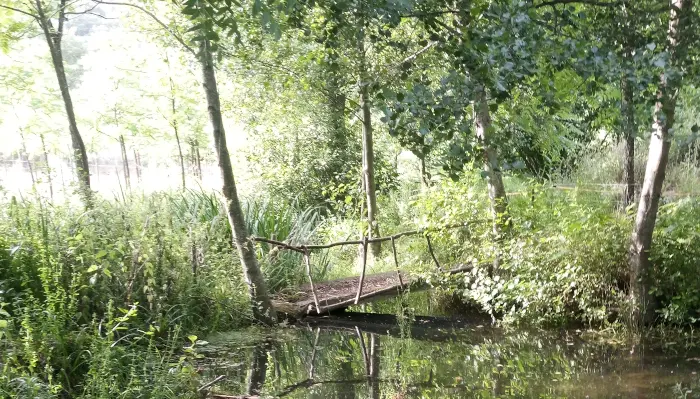







This case might be different because my land was touched by fire this year, but the intense heat we have had throughout the year is affecting the plants as well. I’m in Southern Europe. The hawthorn (Crataegus monogyna), singed by flames two months ago, has started flowering now, normally happens in spring. The oaks had the fire pass under them and have grown new leaves.
I have come to believe that plants, like humans, can adapt very quickly to changes. If things get rough they will try something else.
I try to copy this creativeness, stubbornness and resilience I see in the trees, and have started to sow some of my garden out of season, and try different growing periods. I have a lot of stuff taking off now that had no chance during 40°C in August.