

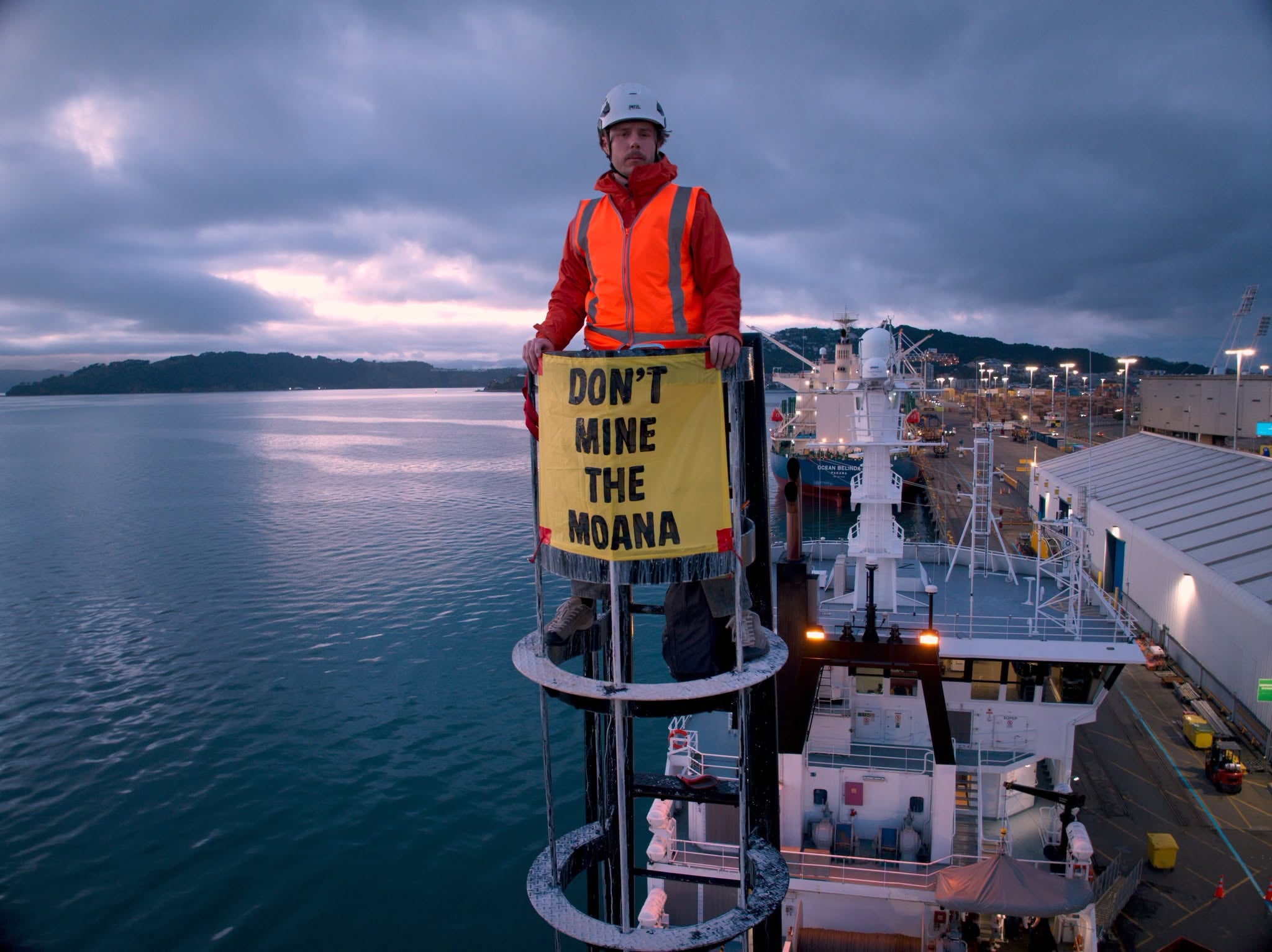
Greenpeace highlighted that its activists boarded the vessel following her return from the Clarion- Clipperton Zone (CCZ) in the international waters of the Pacific, where the ship surveyed deep-sea minerals. The research was carried out on behalf of UK Seabed Resources Ltd (UKSR), a wholly-owned subsidiary of Glomar Minerals.
According to Glomar Minerals, Tangaroa had departed Tahiti in late July for the CCZ to survey its license area for polymetallic nodules rich in critical minerals. The campaign was the first comprehensive geological and biological survey of the UK2 license area in more than 40 years. UKSR’s license areas cover approximately 133,000 square kilometers of deep seafloor, an area covered in polymetallic nodules containing manganese, cobalt, nickel, copper, and rare earths in a single ore.
…
“If deep-sea mining is allowed to go ahead, it will strip the seafloor, risking irreversible damage to the ocean we all rely on, to supply minerals for Trump’s war machine. Pacific Peoples are at the frontline of this fight, and deep sea mining puts their way of life and cultural heritage at risk. It must not be allowed to start,” said Juressa Lee, Greenpeace Aotearoa campaigner.