

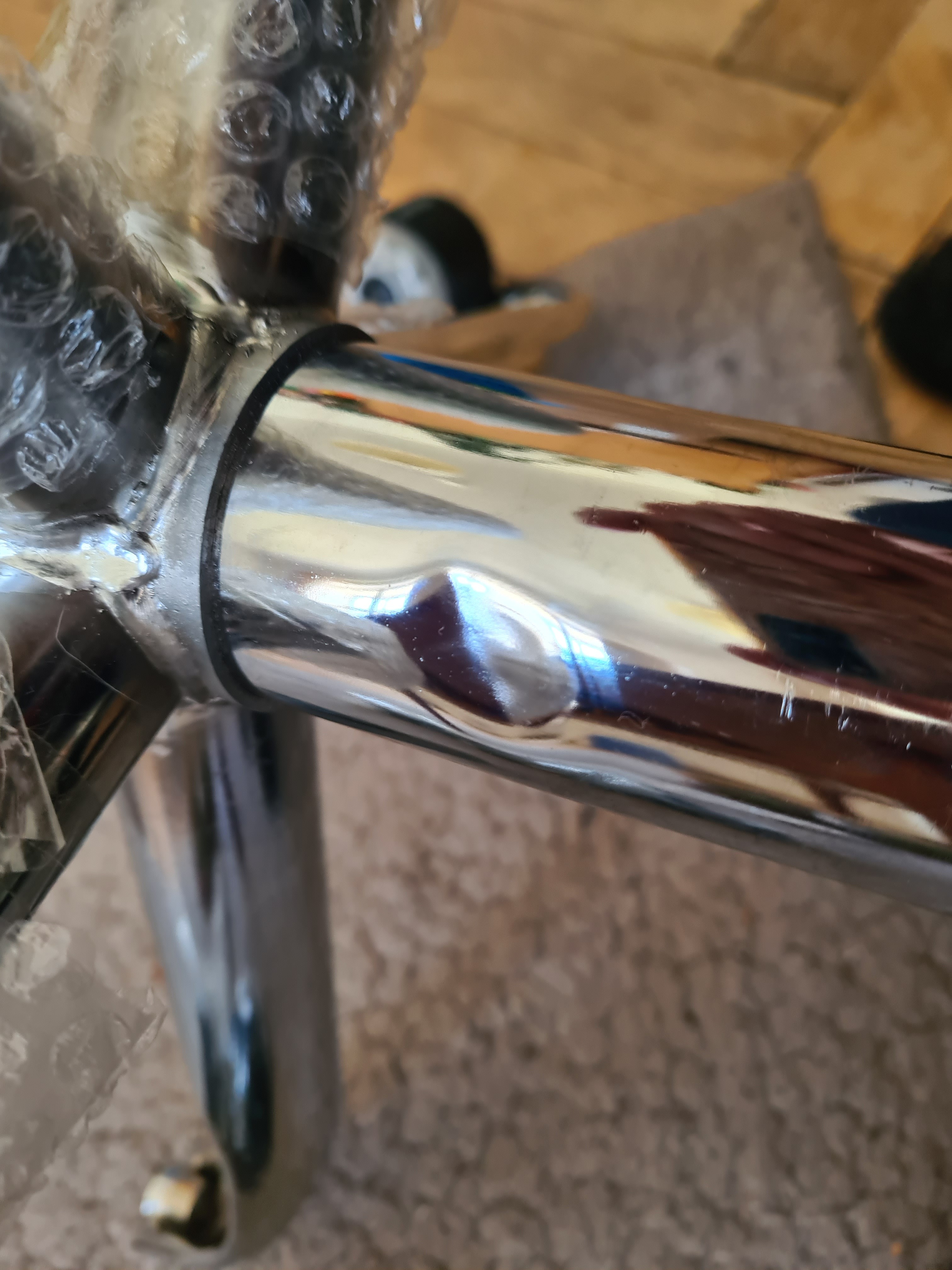
The first photo might look slightly more dramatic than it is, here area two more:
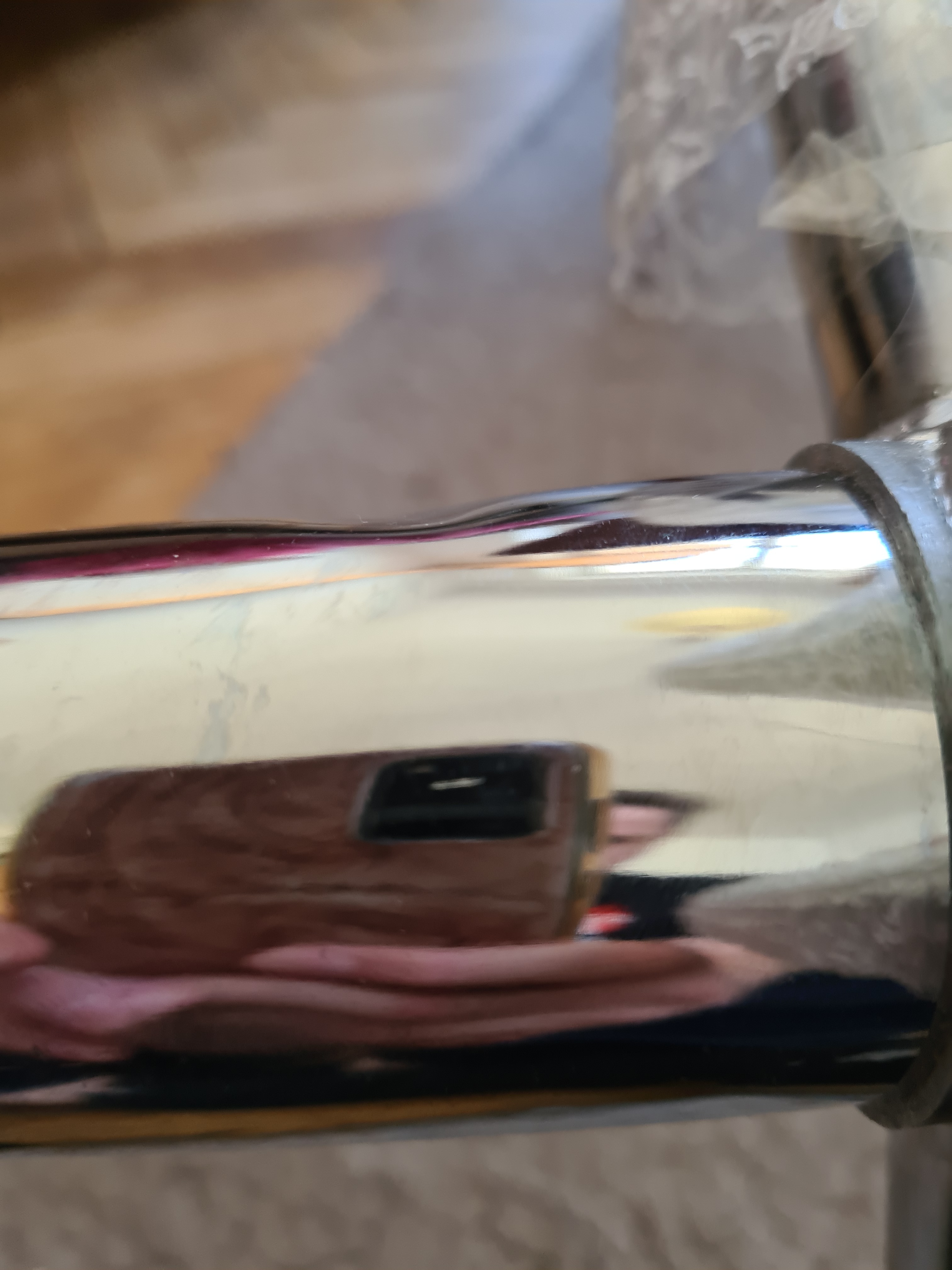
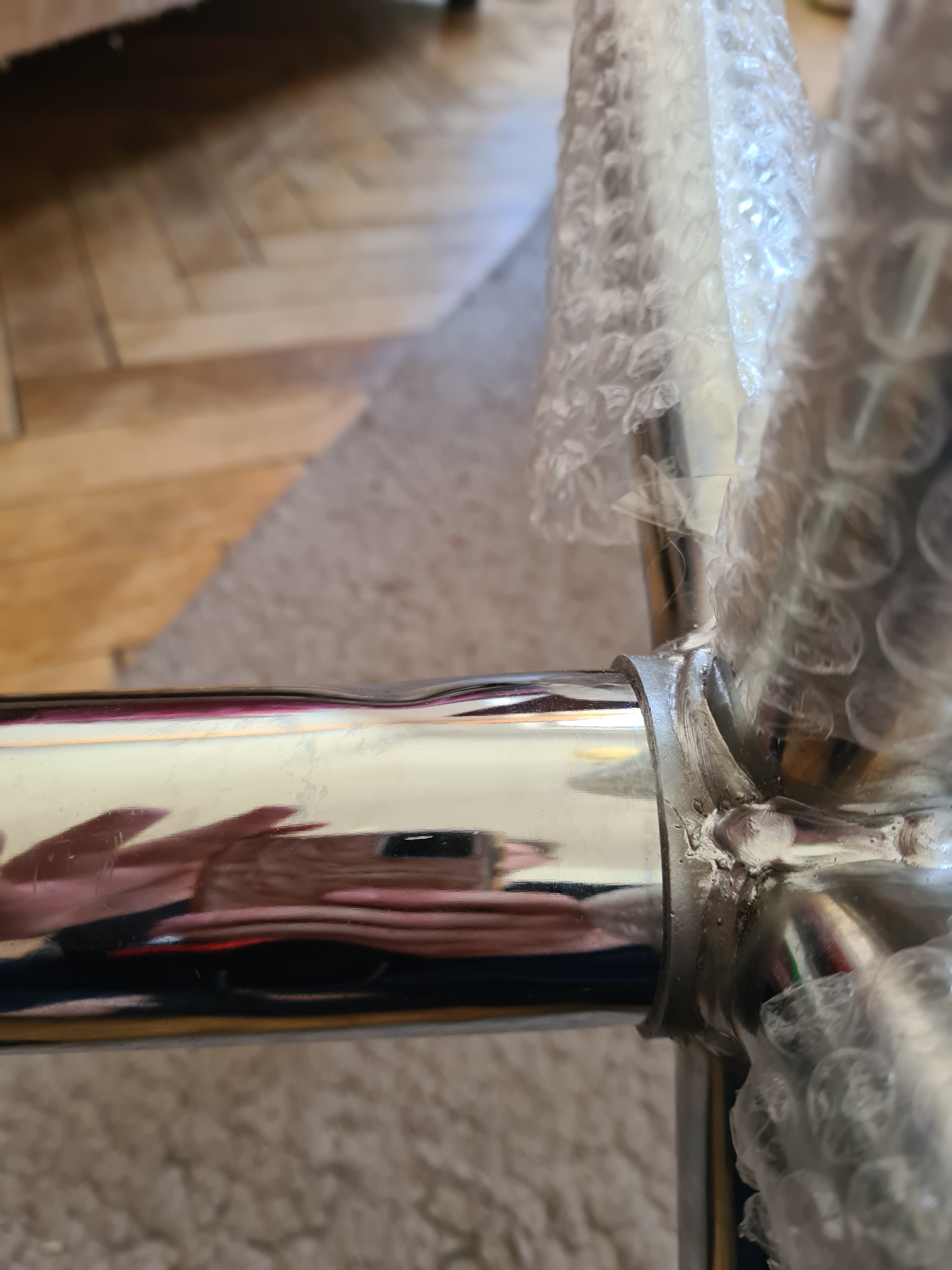
So I tried to remove the gas compression spring of my new office chair from the sockets to send it back. It’s firmly stuck in both ends, and I read the recommendation to knock it with a rubber hammer. I couldn’t find one, so I covered the gas spring with some soft cloths and tried a regular hammer - and was a bit too enthusiastic. Is this spring still safe to use? I’m guessing/hoping that that’s not really the outer wall of the gas cartridge? It is still working, extends and compresses smoothly.
EDIT: so I saw a couple videos about this topic where people removed the holding clip on the bottom end of the gas lift, allowing them to remove the cylinder that I dented from the actual gas spring. I did that on my gas spring and low and behold, I was able to remove it and verify that the dented part isn’t actually under pressure - it’s rather a duct/guiding rail and pretty cover for the lifting bar that sticks out of the actual spring. So the spring is safe to use once I put everything back, but that outer cylinder might never go anywhere ever again. However, since the spring is still usable, I’m keeping the darned chair and have no more need to get it out for returning.
Hmm I see. What I may have left out is that, since the goal is to use the prying leverage offered by the length of the shaft, the end you aim to free should remain as flat as possible while you apply that prying force.
One of the easiest ways to ensure this is to use body weight to keep that end flat on the ground. If that’s not possible or too difficult, you can alternate pressing down with one foot then the other, then rotate the shaft 45 degrees, repeating until it lets go.
This method uses the fact that a cylindrical friction fit tends to have one radial axis applying the most cumulative friction on the shaft. The prying force shifts the oppositional maximal friction points to a different axis, and the steady pulling force during that shift allows the collar to be incrementally extracted from the cylinder.
The key thing to bear in mind, however, is that these increments can be tiny, meaning you won’t get much if any perceptible feedback indicating progress as you proceed with the pry-pry-rotate-pry-pry-rotate cycles. But if you drew a line with a greasemarker on the outside edge of the exposed length beneath the collar, you will likely see the collar’s incremental extraction progress.