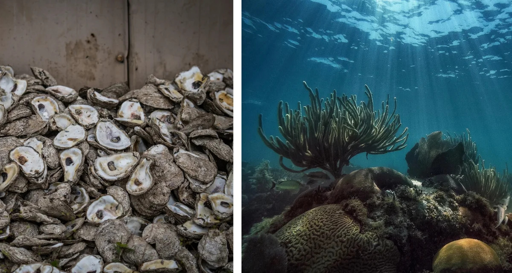
Some called it reckless dumping. Others warned it would be detrimental to an already dwindling ecosystem. And for a while, these concerns seemed valid. Even the researchers running this giant experiment had their doubts as no visible progress was initially seen.
All of these things and more helped revive fish, turtle, and dolphin populations to numbers not seen in over two and a half decades. Layer by layer, the ocean floor had rebuilt itself until the results were visibly undeniable.
A half million tons of shells were dumped. Headline kinda missed the scale of this whole thing.
Headline kinda missed the scale of this whole thing.
It’s LLM-generated from some mill called UpWorthy; the fact it’s on Yahoo! News just lends it some credibility because most people aren’t going to understand that, while Yahoo! News has some original articles of its own, it’s primarily a news aggregator with minimal quality standards.
Restoring the balance of these elements is not only critical to marine life, but human life as well. And we’re not just talking about food supply here. A lack of fish means a lack of income for fishermen, and higher prices at seafood restaurants. Dirty waters lead to a decline in tourism. Reefs even provide natural protection during coastal storms. It’s almost like every aspect of our lives is directly affected by the state of our environment. What a concept!
OP genuinely doesn’t seem to give a shit about the quality of what they post; I administered the other day what I think has been the first temp ban of a poster from !leopardsatemyface@lemmy.world because they refused to learn when their posts got removed for clear lack of relevance.
Edit: This article never once sources this information. The FDEP talks about using oysters but never says 500,000 tons, and all I can immediately find about that specific claim are some shitty AI videos from late 2025.
Edit 2: But here’s a neat report! Again, though, the 500k number seems to have been pulled out of an AI hat.
“No one expected” sounds like they didn’t talk to any coral reef biologists.
It’s been known for a long time that marine invertebrate shells are mostly made of calcium carbonate which dissolves into the water, acting as a pH buffer. Since coral skeletons are also made of calcium carbonate, corals need calcium carbonate rich water to grow.
Ocean acidification is one of the big downstream negative effects of climate change. CO2 in the air dissolves in water and becomes carbonic acid, lowering ocean pH. As the pH drops, coral reefs begin to bleach and die off. By adding large amounts of calcium carbonate rich material to the ocean, ocean acidification can be counteracted and coral reefs protected.
The post title and body read like AI clickbait, maybe that’s why
Thank you for explaining.
So we should dump oyster shells around dwindling coral reefs? Sounds easy.
I think the corals are bleaching due to the heat.
But yes artificial reefs are not new in any way.
I didn’t know that CO2 contributed to bleaching, but I know the heat sure does. I wonder if they sunk these lower than usual or something.
You’re right though, the article is about as well researched as an ikea manual
It’s both, no? The CO² greenhousing but also increasing ocean acidity.
Yeah, I hadn’t honestly thought about the disolved CO2.
I guess I just figured algae was responsive enough and didn’t know there was that much CO2
sounds like they didn’t talk to any coral reef biologists.
I mean, it’s Florida…
This is the exact thing they did with the Chesapeake Bay in Maryland after rwalers destroyed to sea floor and the oyster population completely collapsed. The oyster population has boomed back since the initial and subsequent efforts to restore oysters in the bay.
Good on Yahoo for calling it Gulf of Mexico, instead of kowtowing to the asshole.
It’s only the Gulf Of America if you’re in a cult or suffering from dementia and shitting in your diaper.
I didn’t think Yahoo generates it’s own news. This is from a website called Upworthy
I’m calling it the Gulf of Brazil to help offset the fascist’s shenanigans.
I’m calling it the Gulf of OwOarchist because it’s mine now, and you’re all trespassing.
we remember this:
… when “they” were a non-profit working for the environment.
but i hope this one works better.
Crazy that oyster shells would work better than old car tyres. Who’d have thunk.
Well after all the shopping trolleys and excess NES cartridges didn’t work, they were willing to try anything!
I could see shopping carts working, tons if artificial reefs form around old ship wrecks.
The article does not explain why anyone thought dumping items made of toxic materials into the ocean would be a good idea.
It was the 70s, they didn’t know tyres were toxic. And by “they” I of course mean the general public, because the tyre manufacturers and Big Oil definitely did know.
Revived turtle populations? Hell yeah!
Sorry, I just think turtles are really good. 🐢🐢🐢
Don’t be sorry that you like turtles. Feel sorry for the ones who don’t like turtles.
Strong shell and feets for marching!

:D
I approve this message. I dig the one with the BFK.