

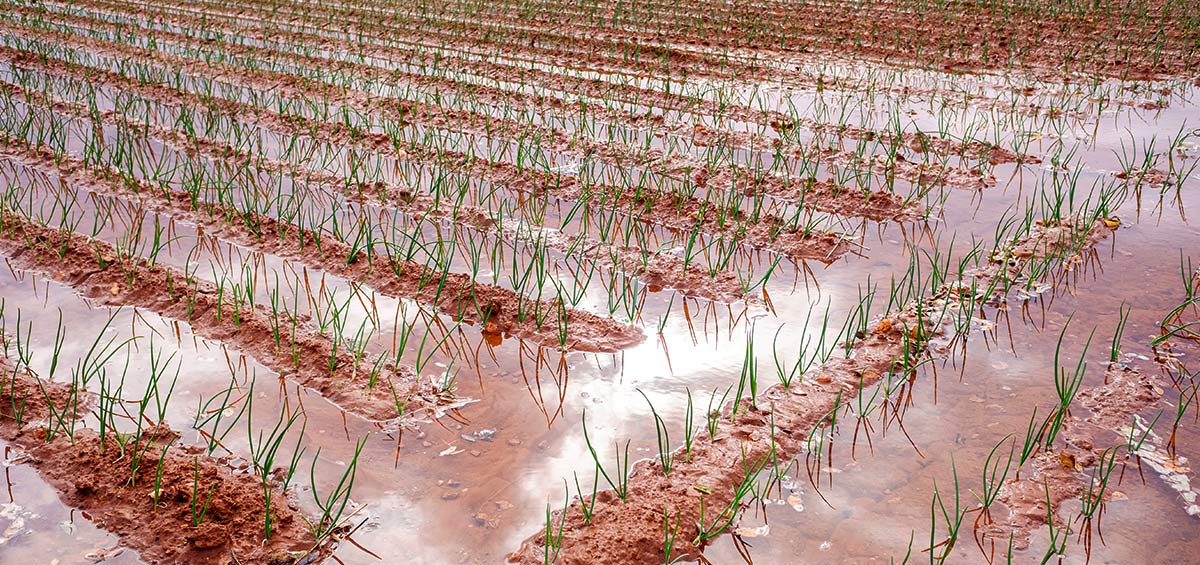
I live somewhere in the Rio Grande river valley. The farm land here uses flood irrigation to water. For those unfamiliar, water from the river is diverted into various irrigated ditches, those ditches can then be used to flood entire fields.
As I was walking home with my dog from our morning river hike, I started to wonder about conditions for peak evaporation. We water our plants at home in the evening as the sun is setting and the temperature drops. But how much does that change evaporation? Is the 20ish% relative humidity more of a factor? Or is air movement?
Many of the farms seem to irrigate in the mornings, when it is still relatively cool. But while it was 64°/17.7° when I left the house at 6:30 this morning it will be 85°/29.4° by 11am and the daily high of 91°/32.7° by 2pm. Giving the ground very little time to absorb the water. Would it be better to water at 8pm at sunset giving over 12 hours of cooling temps?
I live in Northern Europe and I would say it’s mostly wind but also humidity. Direct sunlight more so on dark things (like wet earth compared to dry earth) and temperature last.
I guess I kind of lumped temperature and direct sunlight together, as here they are basically one and the same. It can be over 100°/37.7° during the day and 60°/15.5° at night.