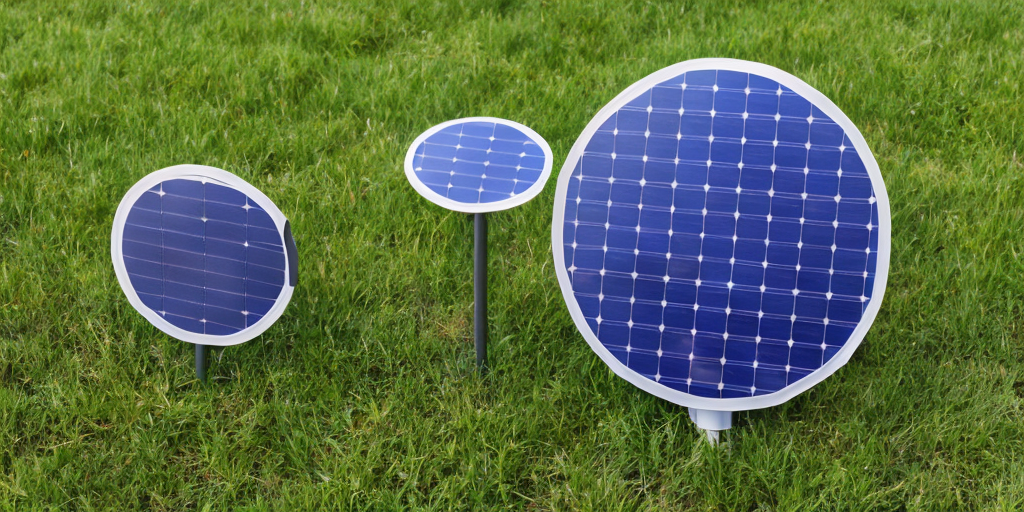
I’m planning to cut my grid connection and go full off-grid. Which raises the question of how much capacity I really need. And what you see here is me trying to answer that question based on ~51,000 5-minute data points of usage data my power company provided to me, complete with custom-made python script to parse all that data and pretty charts! (Yes, I have 6 monitors. And this kind of shows why.)
And what I’m really torn about now is how much battery capacity I need. Should I get enough to cover the absolute worst case scenario (~66kwh) or is something closer to my average overnight usage (~20kwh) acceptable?
Not the absolute end of the world if the batteries run dry and I need to temporarily supplement with generator backup, I suppose. Nobody is life-or-death depending on any electrical appliances here, and even on the coldest days, waiting a few minutes to go start a generator isn’t a huge deal.
But definitely would like a word from the wise about how much battery capacity I really need. And also how much solar panel wattage I need, I suppose.
We live in North Scotland in an old house that has solid walls with no insulation, with about 300mm of roof insulation.
40kwh of batteries.
Heatpump with ufh.
8kwh of solar panels.What we were told with the batteries is that we can’t use all of them. You have to leave about 10 percent in them at a minimum or you may damage them. So factor that in.
Heating is through a heatpump. And log burners when it’s really cold. In the last winter we had it at -11c at times. It’s quite windy and stormy at times up here.
Solar panels. They don’t really put out any power in December or January. We were lucky if we were getting 1 kWh a day in January…
Though they do power us most of the spring, all summer, and most of autumn. Basically from the middle of November, December, January, February, and the middle of March we need to supplement from the grid because of the heating. Though if I lived alone I wouldn’t need to supplement any power in most of Nov, or Feb. But as I live with people who really feel the cold we need to have the heating on even during the warmer days of March.
If we didn’t have a heatpump then we’d hardly need to supplement at all as our daily electricity usage is about 12kwh. But then we’d need to use heating oil etc etc.If we were to try to go off grid then we’d need to get rid of the heatpump AND have to at least triple our solar panels.
We were projected by, I think, OpenSolar project to be able to produce 4kwh a day in Dec and Jan with our panels but in reality in the whole of December we produced about 50kwh and in Jan it was less than 30kwh for the month (though it was a really bad in Jan. The worst weather for nearly 20 years.)Our daily electric usage in December and January with the heatpump was about 50kwh. Which means what we produced in the whole of January and December wouldn’t power and heat us for 2 days…
Over the next year we will be insulating the house and roof etc as much as possible. So, hopefully, next winter we won’t need nearly as much heating. Hopefully. Have you noticed I used the word hopefully a lot…?I want to go off grid but I don’t know how.
It’s either, get rid of the heatpump and triple the panels, which we don’t have the land for. Or a wind turbine.
If we go the wind turbine route then we’d probably need a 5kwh version to produce about 2kwh. And I think the 5kwh ones are expensive. Though we may get away with a smaller turbine once the house is insulated.No idea if I’ve helped, but if not then hopefully you’ve got a few ideas to think about.
In the perfect world we would’ve spent the first year here insulating everything as much as possible. Then look at the heating etc. Unfortunately time constraints meant we needed to do the windows and doors then renovate the inside first. Hindsight is a great thing.
You mentioned you have solid walls, have you looked at insulating them? My house has similar walls, and the various options and trade offs are driving me to distraction and decision paralysis. If you have any thoughts on options, could you share them?
Well we already made up our minds that we were going to externally insulate before we moved in. It may be more expensive but there’s a lot less mess and upheaval when compared to internal insulation.
If we did internal insulation then we’d have to rip out all the plasterboard/lath and plaster etc, rejig the electrics etc, insulate, refit plasterboard and plaster. Whereas with external then all I have to do is clean the render off and reroute the guttering and downpipes.
Plus I’m doing it all myself. Mostly to save money, but also because where we are there’s not many people around who do the things we need doing.
Example: when we moved in we had an oil boiler but no heating yet the quickest a plumber could get out to us was about 2 or 3 weeks, and that was doing a favour for the farmer who we bought the house off.Now that type of external insulation…?
Like I said, our house is all solid walls but only about 30% of it is the original sandstone that they dug out of the ground to build it. The rest is high density concrete blocks.
On the concrete part of the house I’m probably going to use the standard EPS. I’m unsure whether to use standard adhesive or use the special foam adhesive. Or a mix of both. But I’ll definitely be using plastic fixings to prevent as much thermal bridging as possible.
On the original part then that’s a bit more tricky because the walls have to ‘breathe’. There are a few things I can use such as wood wool or mineral wool. Finished off with lime render of some sort.We are also going the MVHR route. Which will keep the humidity down etc.
There is another thing called geocell insulation
https://unitylime.co.uk/shop/brand/geocell/geocell-foam-glass/
Apparently that stuff could go in between the plaster and wall, and apparently it doesn’t stop and condensation but it does keep the heat inside. I’ve only just heard of this stuff so I don’t know much about it. I learnt it from a guy who sells it when I was at a Self Built show a free mouths shop. I will do the research on it at some point, and if it does allow the walls to breathe then I’ll also get loads of that and pump it into my walls. Fingers crossed.What are your thoughts?
Solar panels. They don’t really put out any power in December or January. We were lucky if we were getting 1 kWh a day in January…
Huh… Good to hear that kind of thing, I guess. And here I was thinking that maybe around 6kw of panels would be more than enough for our average usage. But if you’re struggling that much on 8kw, maybe I should go bigger, a lot bigger. (Luckily, I’ve got the land for it, and I could put up an absolute ton of panels if necessary.)
Also definitely thinking of putting up a wind turbine or two, which would hopefully help supplement, especially in those cold, dark times when the gap between production and demand is the highest. Could easily be worth the cost if it means we need fewer batteries.
People will get better results with 6kwh than we do with 8kwh in different countries.
It all depends on location. And panel direction and angles.If you can wait for the batteries then what about going for sodium ones? They are supposed to last longer than lithium.
If you’ve got the cash, the land, and the know-how I would go bananas with the panels. They are maintenance free, unlike turbines. They usually have 30 year guarantees, unlike turbines.
Just do some good research in to dump loads.We are going to be adding another 18 or so panels when our barn roof is repaired. Plus a few more on our car port and then completely fill the main house roof next year at some point. There’s no point in doing it until all the insulating is finished and we finally know how much energy we will need in the winter months.
We have a 15kWh system in a temperate area, and in the winter some days we only make 4kWh the whole day, and others we make 90kWh or more (so long as we can find things to use that power - it only generates power that has somewhere to go, and we are capped at 5kW to the grid at a time). As far as I’m aware, 15kWh is a large residential system, to the point it may be at or over a legal cap depending on your area.
One thing we noticed is that a battery doesn’t actually hold that much power. We will easily chew through double the battery if the heating is on overnight (a heat pump system, so it’s also reasonably efficient). Our hot water is also heated electrically.
Do you not have the ability to sell to the grid or have net metering? When I was looking at it, the calculation was easy. If you can sell to the grid forban ok amount compared to what it costa to buy, if you have enough generation capacity to be off grid, then it’s always worth being connected to the grid because excess power in the summer will easily cover the cost of being connected. I live somewhere with a lot of competition for power companies, with some specialising in solar, so YMMV.
As mentioned, the battery doesn’t help that much. I calculated a 40 year+ payoff time for the battery (the battery won’t last 40 years). To have enough battery capacity to cover the worst winter periods it may just be cheaper to save your money, not get a battery, and use the money you saved to pay for grid connection 😆
If your worst case scenario is in the winter (heating), that level of power generation may not be achievable on a residential system. If it’s the summer (AC), you have a shot.
Our system also lets us disconnect from the grid (and connect again) at the push of a button. You can always do your best, then use a setting like this (if yours has it) to test your ability before actually dropping your grid connection.
Sorry not sure if this answers your questions, seems more like a ramble, but I’m happy to answer any questions you have about my experience getting solar.
(I also did not DIY it, but did work with an installer to work out what we wanted)
Do you not have the ability to sell to the grid or have net metering?
Really not an ideal solution…
A) That requires permits and inspections and other red tape that will be very difficult and expensive for someone DIYing the whole project. The biggest problem is that it requires a complete electrical inspection before connecting and … there’s no fucking way my house is passing an electrical inspection. It was built in 1910 and has been modified by several half-baked homeowners before me. Nothing is really up to modern code, and it’s all an overly complex patchwork of upgrades and additions that barely works as-is. (Seriously, not a single one of my breakers is labeled … on any of the 4 separate service panels. I have some circuits permanently turned off because the wires in the walls are fucked. It’s a nightmare.) To even be allowed to do net metering would likely require a huge gutting and revamp of the entire house’s electrical systems.
B) Even if I did all that, there’s no guarantee the power company would go through with it. Apparently, they have a cap on the number of houses that can do net metering, and if there isn’t any openings, you’re just shit out of luck. (And they’ll keep the $100 application fee, thanks.)
C) My power company’s net metering policy is kind of crap. You never get cash for selling power back to the power company – you get energy credit, which can be banked up and then redeemed for free electricity later. That wouldn’t be horrible, except that they also arbitrarily reset your balance to 0 on March 31st every year, no matter what your balance is at that time, and you get nothing for it. (And they still charge a ~$40/mo ‘basic service’ fee that you have to pay even if you used 0kwh. Those service fees alone could pay for a lot of batteries over time…)
All that combined has me leaning more toward cutting the cord entirely and going off-grid with battery storage … even if it means I have to buy a shitton of batteries and/or have a backup generator available for those few exceptionally cold winter nights.
(And besides, a few long outages recently have really made me want to be fully independent. And wouldn’t it be great to tell the power company to fuck off and never get another power bill ever again?)
Currently, I’m leaning toward a more moderate system of, say 40kwh of storage, and see if we can work within that just by avoiding doing anything too intensive/wasteful at peak demand times. (Like, maybe we don’t need to bake a pizza during one of the worst nights of a winter cold snap.) And if we end up using the generator more often than we’d like, then just upgrade to more battery storage then.
A) Ah ok, well good that you’ve thought it through. I had disconnecting from the grid in mind when we fist did ours, and it turned out to be the wrong approach, but our situation was quite different.
B) That seems weird but ok, some power companies here don’t offer anything related to solar but we have a national spot price buy/sell system so almost anyone can start a power company selling the grid power, and you can use almost any power company from almost anywhere, but I know that we’re lucky with that. We are limited (everyone is limited) at how much we can sell at a time in order to keep the power line voltage within tolerance, which I guess your power company handles in another way.
C) Ah that sucks. We get paid 2/3 of the value of buying when selling to the grid - though it is in credit. I haven’t worked out what happens when we never use the credit but it doesn’t seem to get arbitrarily reset!
All that combined has me leaning more toward cutting the cord entirely and going off-grid with battery storage … even if it means I have to buy a shitton of batteries and/or have a backup generator available for those few exceptionally cold winter nights.
Yeah it sounds like you’ve got some strong arguments for it!
And wouldn’t it be great to tell the power company to fuck off and never get another power bill ever again?
Well, I like my power bills because most of the year they are credits 😆
It seems like most of my experience might not be helpful to you. I’m willing to send you a year of power generation data from Home Assistant if you think it would be helpful? It would show you the variation day to day and might help you see what kind of impact there is with poor weather.
At a guess I’d say I don’t think one 10kWh+ battery would be enough to go off grid. Two might cover most situations if you have enough panels, don’t live in a super cold area (or have non-electric heating), and do power hungry things only in the daytime (charge car, run dishwasher, run clothes dryer, etc). Also an electric stove can use more power than you might think, cooking a roast dinner can chew through half our battery no trouble. Plus it will work out better if you shower in the morning (so heating mostly happens when the sun is shining). Three batteries still won’t cover every day but I think if you have a generator available and are careful about timing during the winter period then it should get you through most of the time.
Solar panels are pretty cheap now, so don’t under do it. Load up on your daytime capacity and use the power then, to reduce your reliance on the still expensive batteries.
Maybe make the call based on the lead time to order the components. If you find you didn’t get enough capacity, it’s easier to solve if you have a 2 week wait to get some more panels and an extra battery vs if you have to wait 6 months.
Sorry, not sure if I’m helping 😅
Nah, don’t worry – that’s helpful! And sure, I wouldn’t mind seeing that data. Though our situations are pretty different, more data couldn’t hurt, right?
At a guess I’d say I don’t think one 10kWh+ battery would be enough to go off grid. Two might cover most situations if you have enough panels, don’t live in a super cold area (or have non-electric heating), and do power hungry things only in the daytime (charge car, run dishwasher, run clothes dryer, etc).
Heh, yeah. I think 20kwh battery would be the absolute bare minimum for us, and I’m leaning toward at least 40kwh. (Especially when you factor in other things – the conversion from battery power to 120v/240v is only ~80% efficient, depending on inverter.* And the batteries will lose capacity over time, so it’s better to overbuild and not need to replace them as soon.)
*Another upgrade path for the future is to run a DC power circuit through the house, at least for some lights and little stuff like phone/tablet chargers. DC power will be significantly more efficient because you don’t have to go through that 80% efficient inverter to get it out of the batteries. Maybe I can even manage to find a heat pump that runs directly on DC.
We’re on pure electric everything here, after all. No gas of any kind.
Plus it will work out better if you shower in the morning (so heating mostly happens when the sun is shining)
For the water heater in particular, I’ve already got a plan: going to put that sucker on a timer, so it can only run during the daytime. Actually already got a $1 thrift store timer, big old electro-mechanical thing, that should be able to do that job. A decent hot water heater will stay hot for days without power, and it’s just two of us here, so it won’t run out too quickly. Let it heat up during the day and then disconnect at night, and the water heater won’t be a drain on the batteries at all. (That works well with our existing routine of showering in the evening, too. It should be nice and hot after running all day, and if it stays cold most of the night, no big deal. In fact, after some experimenting to see how quickly it heats up from dead cold, I might not even have it run during all daylight hours, just start it up a few hours before we usually shower.)
To some degree, I might try to do the same thing with heat, using programmable thermostats to raise the temperature during the day and then reduce heating demand during the night. Thermal storage is a lot cheaper than battery storage, after all. Who knows, might even go super crazy and actually build in some water tanks that can be heated during the day and then release that heat at night. Got a bunch of old 55 gallon drums sitting around I’m not using for anything else … just need some heating elements and timers… (But, yeah, that part would definitely be a project for later. And still not sure I want big drums of water sitting around in our living space, especially because they’ll be nearly useless in the summer.)
If it gets really desperate, I might even put the refrigerators on timers. They should be able to stay cold overnight okay, and then they can run all they want during the day.
I had an electric water tank for some years, it did only heat during 4h a day splitted in 2 morning and 2 afternoon, thats more than enough. Just install a temperature logger so you keep track of the temperature. In terms of batteries, they are too expensive for a normal use, invest on a few more panels and try to reshape your consumption.
And sure, I wouldn’t mind seeing that data.
I’ll find somewhere to upload it and DM you. I’d rather not feed it into AI scrapers by posting it publically 😅
I think 20kwh battery would be the absolute bare minimum for us, and I’m leaning toward at least 40kwh.
Don’t underestimate how expensive that will be! Ripping all your electricals out and re-doing it to code will start to look like the cheaper option! It’s not unusual for one battery to be more than half the cost of a solar system. If you have the money it will give you peace of mind, but you don’t need the capacity for daytime usage as you’ll just go straight from solar panels through inverter to what you’re powering.
And the batteries will lose capacity over time, so it’s better to overbuild and not need to replace them as soon
Batteries are a quickly evolving technology, you may well save money or gain higher capacity by only buying as you need the capacity (as the capacity of your batteries falls over time). Also, there is evolving technology in relation to cars too. A mid-range EV may have a 60kWh battery. Tesla is testing technology where you can plug your car in and have the car power the house overnight then charge in the the day when you have excess solar production. I would never suggest buying a Tesla but the technology sounds like a good idea and in 5-10 years it might be available across a wide range of cars.
*Another upgrade path for the future is to run a DC power circuit through the house, at least for some lights and little stuff like phone/tablet chargers. DC power will be significantly more efficient because you don’t have to go through that 80% efficient inverter to get it out of the batteries. Maybe I can even manage to find a heat pump that runs directly on DC.
Unless you have incandescent lights, I think that’s the wrong thing to focus on. Lights use hardly any power compared to heating. Heating air, heating water, heating your over, heating a clothes dryer. AC can use a lot too. If you can get those via DC that might help, but honestly that sounds expensive compared to just throwing on some more panels and using them in the day.
You can get heat pump hot water heaters, which will save energy. Ours also allows control for excess solar production, heating to a higher temp when solar production is high. By heating to 75 Celsius (the max) it will go all night without needing to heat again, and be about 65 in the morning. It can get to 65 with the heat pump, then has an element to get to 75 (less efficient but it’s only used for the excess solar anyway). It still comes out of the tap at 50 even if the tank is 75 so I don’t have to worry about scalding the kids or anything. I do this control via Home Assistant and a wifi connection but it is advertised as “solar ready” and has a cord that apparently can connect to a solar system to control that excess usage. It’s an all in one unit, the whole thing sits outside.
You can also get heat pump clothes dryers, and of course a heat pump for heating/cooling.
We’re on pure electric everything here, after all. No gas of any kind.
Depending on climate (I keep saying that as I don’t want to be responsible for you freezing to death), that could make a big difference. We are a family of 5, but the house is insulated in ceiling/external walls/under floor and it has double glazed windows. Yours is 100 years old. So I’m thinking that 40kWh may actually be a good amount of battery capacity for you.
For the water heater in particular, I’ve already got a plan: going to put that sucker on a timer, so it can only run during the daytime. Actually already got a $1 thrift store timer, big old electro-mechanical thing, that should be able to do that job.
I’ve heard of this a lot actually. It’s a good plan, seems to work for a lot of people.
In fact, after some experimenting to see how quickly it heats up from dead cold, I might not even have it run during all daylight hours, just start it up a few hours before we usually shower.)
If it’s a modern hot water heater, like you say it will stay hot easily. Let it turn on some time in the morning once the sun is up and strong, that way you have it hot if you need it and it’s unlikely to make too much difference in the power - especially since most of the year you’ll be making more than you can use.
To some degree, I might try to do the same thing with heat, using programmable thermostats to raise the temperature during the day and then reduce heating demand during the night. Thermal storage is a lot cheaper than battery storage, after all. Who knows, might even go super crazy and actually build in some water tanks that can be heated during the day and then release that heat at night.
This sort of thing used to be what people would install in their houses. Older houses around here often have “night store” heaters, which is where they are on timers for the cheap night electricity and they heat bricks within a metal cover that then leak that heat out the rest of the day. That sort of thing but heated in the day would be ideal, I have no idea if you can still buy that sort of thing off the shelf but your hot water idea seems like the same thing - just that you need that water stored inside, and one day (whether next year or in 30 years) they will rust through and make a big mess! If you keep an eye on it, then it seems like it would work. After all, it’s basically a radiator.
If it gets really desperate, I might even put the refrigerators on timers. They should be able to stay cold overnight okay, and then they can run all they want during the day.
If you use one of the many online tools to mark your location and roof angle, it can tell you your estimated production over the course of a year. Inverters tend to only handle 10kWh production at a time (with short term spikes above that), but if you can generate even an average of 5kWh over 8 hours in winter that’s 40kWh of power. It’s hard to imagine 2 people using more than that outside of very specific events, in which a backup generator will likely be cheaper than another battery (if you don’t have one already) and can be filled up again even if the sun isn’t shining (which isn’t the case for an extra battery).
Right, I’ll find that solar generation data and send it through.
Tesla is testing technology where you can plug your car in and have the car power the house overnight then charge in the the day when you have excess solar production. I would never suggest buying a Tesla but the technology sounds like a good idea and in 5-10 years it might be available across a wide range of cars.
The Ford Lightning does that, too, without having to support the Muskrat. But a vehicle that new would be pretty far outside the budget right now.
Anyway, you’ve got me a bit curious now about the possibility of finding an EV battery in a junkyard and maybe using that as solar battery storage. Though … those usually run at pretty high voltages. Finding both charge controllers and inverters capable of dealing with those voltages might be difficult and expensive enough to negate any possible cost savings on the battery itself. Plus, then I’d be kind of locked into that type of battery when the time eventually comes to replace it, since that high voltage equipment probably won’t easily convert to a more usual 48V system.
Depending on climate (I keep saying that as I don’t want to be responsible for you freezing to death)
Don’t worry, we’re hardy folk! Having parts of the house freeze over is actually kind of routine for us at this point. We only heat small rooms within the house, and through much trial and error, we’ve found freeze-resistant plumbing options. (We used to have basement floods every winter, but now we’ve converted the whole house to pex plumbing, which turns out to have good freeze resistance. Copper always developed cracks or pinhole leaks, steel would always burst a fitting, PVC would absolutely shatter, but pex has enough flex to it that it has been able to survive a few good freezing events without causing any leaks – just a temporary lack of water. And in those temporary freeze-ups, we have an outdoor frost-free faucet run directly off the supply line that always works, and we can fill from that for a day or two until the cold snap ends and the plumbing gets above freezing again.)
And there’s always the backup generator, which will cost a fortune to run, but will prevent anybody freezing.
Though it may worry you even more, I actually think I’m planning on putting that backup generator in the basement (with tightly sealed and double-wrapped exhaust pipe running outside, air intake routed from outside, a remote shutoff switch, and a dozen carbon monoxide alarms scattered around, of course!) But the advantage there (besides not needing to build and outdoor weatherproofing enclosure for it) is that most of the generator’s waste heat would then help heat the house, at least enough to keep the basement above freezing and keep most of the pipes from freezing. Since most of the times we’d need a generator are when it’s very cold, that could actually make it way more efficient, since most of its energy would be used for heating anyway.
just that you need that water stored inside, and one day (whether next year or in 30 years) they will rust through and make a big mess!
Don’t worry about that, they’re plastic drums. The biggest concern would be that they might at some point freeze and burst … but that would never happen if I fill them with an antifreeze solution. The real biggest concern is just how much space they would take up … and possibly how much weight they’d be adding to the floors.
Inverters tend to only handle 10kWh production at a time (with short term spikes above that)
Yeah, may end up having multiple charge controllers in addition to the inverter’s built-in solar charge controller(s).
Personally, I’d prefer to have those systems be entirely separate in the first place, so each one can be sized according to need and each one can be independently replaced if it breaks. But it seems that most inverters capable of handling our ~6.2kw absolute peak usage already come as ‘all in one’ inverters with solar charge controllers built in … I guess I might as well use the built-in charge controller, at least for part of the solar array.
It’s hard to imagine 2 people using more than that outside of very specific events
Yeah. Honestly, I have no idea how we ever got up to 6.2kw that one time… Our average usage never even gets close to 2kw. We’d definitely have to be running the oven at full blast, probably and a couple stove burners, and possibly the microwave/tea kettle at the same time … and probably some other big loads to even get that high.
But the nice thing about having all this data to look at is being able to see that those peak usages are very rare. Out of ~51,000 five minute data points, only 70 five minute segments had usage above 4kw, and never more than about 15 minutes in a row.
Even if we changed absolutely nothing about our usage, if we built the system to be capable of providing 4kw reliably, we’d only need to use the generator ~6 hours per year.
And, honestly, It just has to be a massive cooking task contributing to those absolute peak usage moments. Nothing else we have could possibly come close to using that much power. If we simply avoid using the stove/oven at night in the winter, that’s probably enough to drastically reduce our peak demand and significantly reduce our need for battery capacity.
Right, I’ll find that solar generation data and send it through.
Thanks!
But a vehicle that new would be pretty far outside the budget right now.
40kWh of house batteries is probably going to run you closer than you’d think to the price of one of these cars… unless you can find some second hand ones (all the same type so you can string them together).
Anyway, you’ve got me a bit curious now about the possibility of finding an EV battery in a junkyard and maybe using that as solar battery storage. Though … those usually run at pretty high voltages.
They often come in multiple cells, depending on your abilities you might be able to wire them up to keep the voltage low. One thing to consider is that your ability to monitor the battery’s charge level and your power usage, in my experience, came as part of the battery. If you’re going to be living off grid, it might be important to have that functionality which wouldn’t come with random ex-car battery cells.
And there’s always the backup generator, which will cost a fortune to run, but will prevent anybody freezing.
If you’re gonna burn stuff inside, maybe a (modern) fireplace would help? Cost to run depends a lot on where you can get wood from, but it doesn’t need power, they generally put out a lot of heat, and you can even get wet-back varieties to help with hot water heating. That would go a long way to getting you less reliant on solar generation in the winter months.
Don’t worry about that, they’re plastic drums. The biggest concern would be that they might at some point freeze and burst … but that would never happen if I fill them with an antifreeze solution. The real biggest concern is just how much space they would take up … and possibly how much weight they’d be adding to the floors.
Plastic cracks with age too! Especially with 200kg of water inside them for a long period. The weight on the floor could be a concern, water is very heavy.
Yeah, may end up having multiple charge controllers in addition to the inverter’s built-in solar charge controller(s).
Personally, I’d prefer to have those systems be entirely separate in the first place, so each one can be sized according to need and each one can be independently replaced if it breaks. But it seems that most inverters capable of handling our ~6.2kw absolute peak usage already come as ‘all in one’ inverters with solar charge controllers built in … I guess I might as well use the built-in charge controller, at least for part of the solar array.
While we miss out on a bit of power when our generation is over 10kW, I don’t think it’s that much, and we have a 15kW system. Realistically making 10kWh over a big portion of the day is way more important than making 15kWh briefly in the middle of the day. You might need that time in winter though, depending on daylight hours. But personally I’d think more panels to get generation up over a long period would be more important than capturing the peak generation.
Our solar company used this site for their estimates, https://www.opensolar.com/ which you might be able to sign up for and see estimates of what you’d need in your location.
6.2kW isn’t actually that hard to hit. You might use that if you oven is heating up while you use the microwave. Well, maybe this is harder to hit if you have 120v power, but with out 240v power it’s pretty easy. I presume you’re talking kW (power load) not kWh (energy usage over time).
Even if we changed absolutely nothing about our usage, if we built the system to be capable of providing 4kw reliably, we’d only need to use the generator ~6 hours per year.
Your battery can likely handle the peak loads above this. I’d expect you to break out the generator only when batteries are running flat, not to handle peak loads. A battery will probably provide 10kW peak load or a bit above this. Your main issue will be if you don’t manage to charge your batteries during the day due to poor weather, then you need to run 2 (or 3) days on your batteries instead of 1.
I mean it’s a complicated question, largely due to factors that are outside of your control (weather). You just make your best guess.
Yeah … I guess I can always upgrade the system later, if I end up using the backup generator more than I’d like.
You can change your fan curve so it doesn’t zig zag so much
Heh, perhaps. I tried once, but it didn’t make any difference. And at this point, I’m not inclined to put much effort into fixing something that isn’t broken (or at least currently works).
Only does this when at practically zero load. Goes much steadier if I’m actually using any significant CPU.