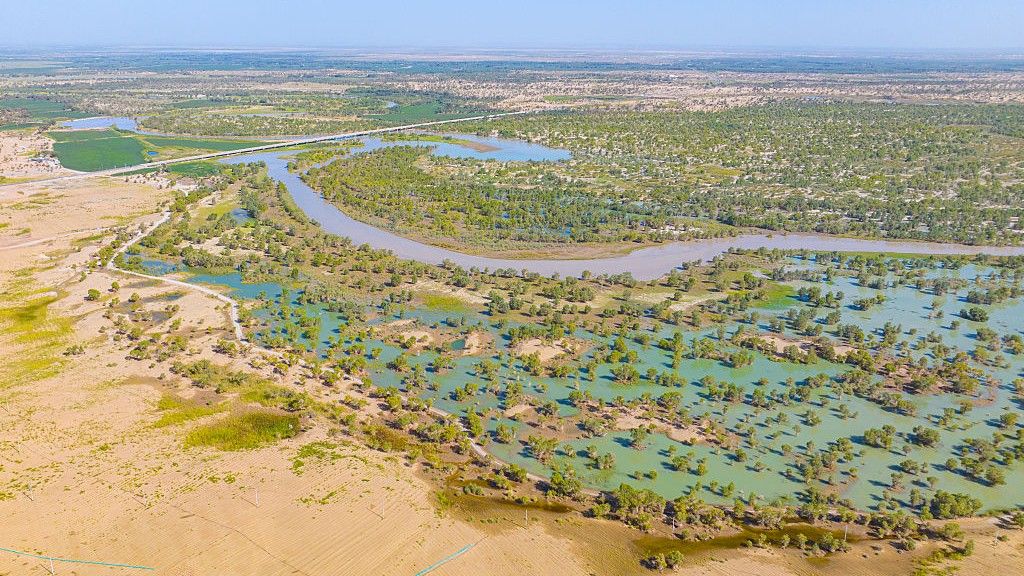
Huge-scale ecological engineering around the edges of one of the world's largest and driest deserts has turned it into a carbon sink that absorbs more CO2 than it emits, research suggests.
Over 95% of the Taklamakan Desert is covered in shifting sand, meaning it has long been considered a “biological void,” according to the study. The desert has been growing since the 1950s, when China underwent massive urbanization and farmland expansion. This conversion of natural land created the conditions for more sandstorms, which, in general, blow away soil and deposit sand instead, causing land degradation and desertification.

 0·2 months ago