

cross-posted from: https://slrpnk.net/post/30584091
What was once considered a climate holy grail comes with serious tradeoffs. The world wants more of it anyway.
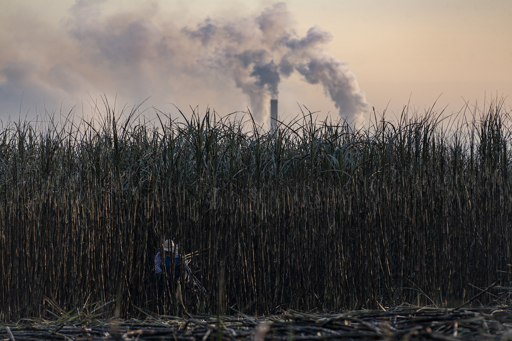
First the plant stalk is harvested, shredded, and crushed. The extracted juice is then combined with bacteria and yeast in large bioreactors, where the sugars are metabolized and converted into ethanol and carbon dioxide. From there, the liquid is typically distilled to maximize ethanol concentration, before it is blended with gasoline.
[…]
The cycle goes a little like this: Farmers, desperate to replace cropland lost to biofuel production, raze more forests and plow up more grasslands, resulting in deforestation that tends to release far more carbon than burning biofuels saves. But as large-scale production continues to expand, there may be insufficient land, water, and energy available for another big biofuel boom — prompting many researchers and climate activists to question whether countries should be aiming to scale these markets at all. (Thomson Reuters reported that global biofuel production has increased ninefold since 2000.) Biofuels account for the vast majority of “sustainable fuels” currently used worldwide.
An analysis by a clean transport advocacy organization published last month found that, because of the indirect impacts to farming and land use, biofuels are responsible globally for 16 percent more CO2 emissions than the planet-polluting fossil fuels they replace. In fact, the report surmises that by 2030, biofuel crops could require land equivalent to the size of France. More than 40 million hectares of Earth’s cropland is already devoted to biofuel feedstocks, an area roughly the size of Paraguay. The EU Deforestation-Free Regulation, or EUDR, cites soybeans among the commodities driving deforestation worldwide.
“While countries are right to transition away from fossil fuels, they also need to ensure their plans don’t trigger unintended consequences, such as more deforestation either at home or abroad,” said Janet Ranganathan, managing director of strategy, learning, and results at the World Resources Institute in a statement responding to the Belém pledge. She added that rapidly expanding global biofuel production would have “significant implications for the world’s land, especially without guardrails to prevent large-scale expansion of land dedicated to biofuels, which drives ecosystem loss.”
Other environmental issues found to be associated with converting food crops into biofuels include water pollution from fertilizers and pesticides, air pollution, and soil erosion. One study, conducted a decade ago, showed that, when accounting for all the inputs needed to produce different varieties of ethanol or biodiesel — machinery, seeds, water, electricity, fertilizers, transportation, and more — producing fuel-grade ethanol or biodiesel requires significantly more energy input than it creates.
archived (Wayback Machine)